


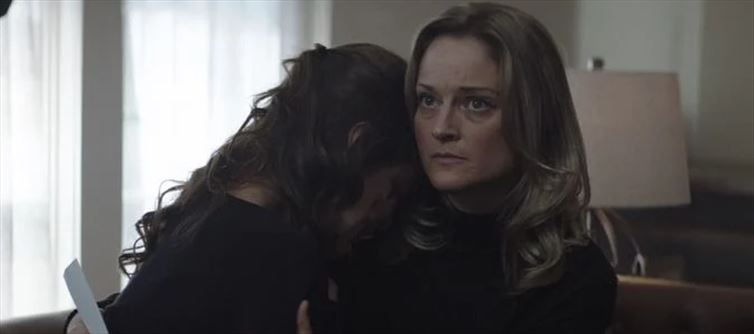

Unfortunately, The Ravine is a muddled rendition of a simple story. The murder mystery is solid, but it never gets a chance to fully engage the audience. The actors accomplishes nothing wrong or right; they are just held captive by the script, which appears to serve two masters. The film's strongly religious components make perfect sense given what the characters go through, but they also massively derail the plot. By the end of the film, the barely afloat ship has been drowned by racist undertones, and director Keoni Waxman's (Absolution) adaptation of Robert and Kelly Pascuzzi's book has sunk.
Danny Turner (Peter Facinelli) commits a heinous act of violence against his family, and his friends and loved ones can't believe he did it. As Detective Ben Lee (Byron Mann) lays forth the facts, they all congregate. As he questions them about Danny's past, it becomes evident that he had a terrible side to him that only a few knew about. Mitch (Eric Dane), Danny's friend, is left to grieve and explore sections of the case that Detective Lee shares with him alone. The story is delivered in pieces from many perspectives, culminating in a revelation about Mitch's approach to life's most difficult circumstances.
Religion is by no means The Ravine's sin. The unforgivable component of the film is dialogue that uses religious references to refer to the lone Black character's skin tone. To that purpose, The Ravine employs the "Magical Negro" stereotype to its utmost extent. Joanna is played by Leslie Uggams (Deadpool), a lady who emerges out of nowhere to console the white protagonists. She knows the answers to questions they haven't asked yet, as well as the entire cast's psychological profile. The Ravine, like many other films before it, believes that this trope is acceptable when the character has a clear spiritual connection to the movie's environment. One of Hollywood's most out-of-date cliches can't be hidden by special effects.
Danny Turner (Peter Facinelli) commits a heinous act of violence against his family, and his friends and loved ones can't believe he did it. As Detective Ben Lee (Byron Mann) lays forth the facts, they all congregate. As he questions them about Danny's past, it becomes evident that he had a terrible side to him that only a few knew about. Mitch (Eric Dane), Danny's friend, is left to grieve and explore sections of the case that Detective Lee shares with him alone. The story is delivered in pieces from many perspectives, culminating in a revelation about Mitch's approach to life's most difficult circumstances.
Religion is by no means The Ravine's sin. The unforgivable component of the film is dialogue that uses religious references to refer to the lone Black character's skin tone. To that purpose, The Ravine employs the "Magical Negro" stereotype to its utmost extent. Joanna is played by Leslie Uggams (Deadpool), a lady who emerges out of nowhere to console the white protagonists. She knows the answers to questions they haven't asked yet, as well as the entire cast's psychological profile. The Ravine, like many other films before it, believes that this trope is acceptable when the character has a clear spiritual connection to the movie's environment. One of Hollywood's most out-of-date cliches can't be hidden by special effects.
 click and follow Indiaherald WhatsApp channel