


🚨 WHEN THE BILLIONAIRE IS SUMMONED, THE NATION PAYS
Adani’s U.S. Fraud Case, Trump’s Demands—and Why india Was Made to Bleed
This is how power really works—not with press releases, but with quiet filings and loud consequences.
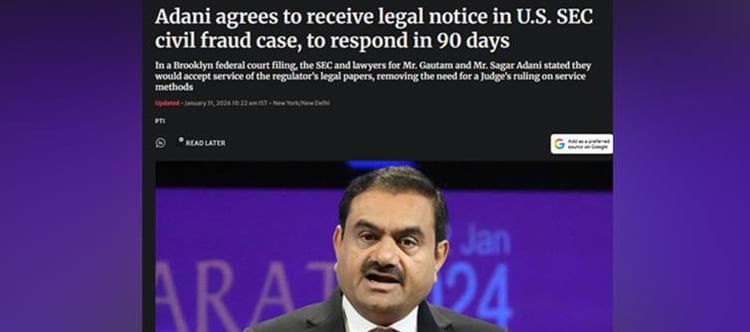
In a Brooklyn federal court, the U.S. Securities and Exchange Commission confirmed that Gautam Adani and Sagar Adani have agreed to accept legal notice in a U.S. civil fraud case and will respond within 90 days. The allegation: investors were misled about a bribery scheme.
That filing didn’t just land in court.
It landed in geopolitics.
This isn’t about one lawsuit.
It’s about what happens after a billionaire agrees to be served legal papers in the United States.
Because almost immediately, India’s trade posture collapsed—concessions piled up, leverage vanished, and “national interest” was quietly redefined.
Coincidence? Or consequence?
🧨 THE CHAIN REACTION
1️⃣ The U.S. Case That Changed the Mood
By agreeing to accept service, the Adanis removed procedural hurdles. The case moves forward—on the merits.
No theatrics. No delays. Just timelines.
That’s when pressure becomes real.
2️⃣ Trade ‘Friendship’ on Trump’s Terms
With Donald Trump back in deal-making mode, india didn’t negotiate—it complied.
What followed looked less like diplomacy and more like a checklist.
3️⃣ Tariffs to ZERO—Unilateral Disarmament
india reduced tariffs on the united states to 0%, giving away bargaining chips without reciprocal gains.
Negotiations are about exchange. This was a giveaway.
4️⃣ Energy Security Sacrificed
india stopped purchasing Russian oil—its cheapest, inflation-buffering supply.
Consumers lost. Import bills rose.
American energy firms gained.
5️⃣ Strategic Retreat from Chabahar
india withdrew from the Chabahar Port—a project central to regional connectivity and strategic autonomy.
Years of diplomacy, erased.
6️⃣ Agriculture Thrown Open
Indian farmers—already under stress—now face heavily subsidised U.S. agribusiness.
No national consensus. No safety nets announced. Just exposure.
7️⃣ Who Benefited From the Rush?
When a government moves this fast, ask who needed it.
The timing—U.S. legal heat on a politically connected tycoon, followed by sweeping concessions—raises one unavoidable question:
Was national policy bent to shield private risk?
8️⃣ Crony Capitalism’s Old Pattern
When business and power fuse, losses are socialised, and risks are nationalised.
Profits stay private. Damage spreads public.
This isn’t governance. It’s hostage economics.
9️⃣ India’s Reputation Takes the Hit
Foreign courts. Foreign pressure. Domestic capitulation.
Investors don’t see “stability” in that. They see vulnerability.
🔟 The Country Didn’t Vote for This
india didn’t vote to surrender leverage.
Didn’t vote to sacrifice energy security.
Didn’t vote to expose farmers.
But it’s paying anyway.
⚠️ THE UNCOMFORTABLE TRUTH
When one businessman’s legal troubles abroad coincide with national concessions at home, the problem isn’t foreign pressure.
It’s who our system chooses to protect.
🏁 FINAL WORD
Accepting a court notice is a legal step.
Bending a nation’s policy to cushion private fallout is a moral failure.
If India’s foreign policy can be rerouted to save “friends,” then the real fraud isn’t just in a U.S. courtroom—it’s in how power is exercised.
 click and follow Indiaherald WhatsApp channel