


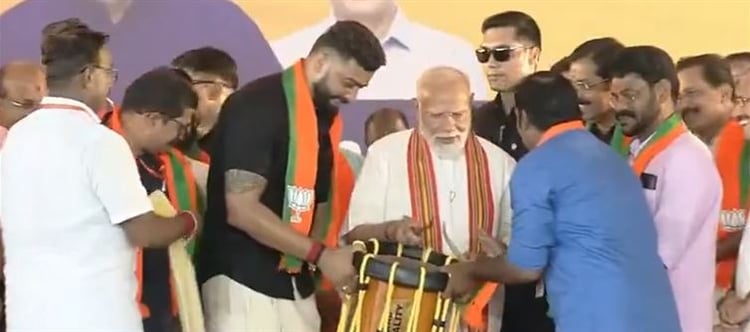

A carefully staged moment. A traditional drum. A cultural nod that looks powerful on camera. But beneath the optics, a sharper question echoes across kerala — is symbolism being mistaken for substance?
1. The Optics vs The Memory
When a national leader picks up the Chenda in Palakkad, it’s meant to signal connection, respect, and cultural appreciation. But Kerala’s voters are not passive spectators. They carry memory — political, social, and cultural. For many, gestures like wearing a mundu or playing a traditional instrument don’t erase earlier narratives that they believe painted the state in a negative light.
2. The ‘Kerala Story’ Shadow
A section of critics still points to the promotion of films like The kerala Story, arguing that such narratives attempted to frame kerala in a controversial and damaging way. Whether one agrees or not, the perception lingers — and in politics, perception often outweighs intent.
3. Kerala’s Political Literacy
Kerala isn’t an easy terrain for symbolic politics. With high literacy, strong political awareness, and a deeply engaged electorate, voters tend to look beyond visuals. Cultural participation alone doesn’t automatically translate into trust or votes.
4. The Clash of Messaging
This is where the contradiction hits hardest: on one side, cultural immersion; on the other, allegations of ideological hostility. Voters are left asking — which version is real?
5. The Verdict Lies Ahead
Ultimately, elections are decided not by performances, but by credibility. Kerala’s electorate has a long history of delivering sharp, decisive mandates. If there’s dissatisfaction, it won’t stay silent — it will show up clearly in the results.
Closing Punch:
You can play the drum, wear the tradition, and speak the language — but in kerala, you still have to earn the vote.
 click and follow Indiaherald WhatsApp channel