


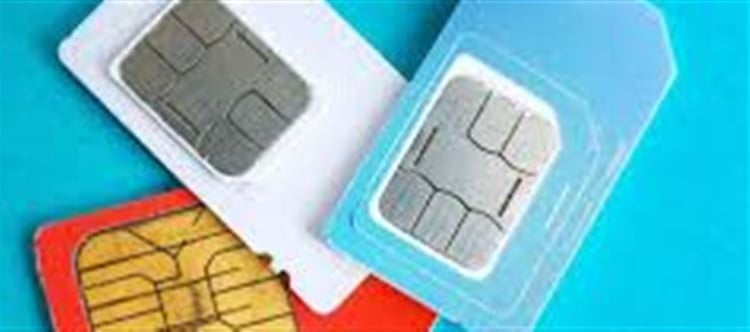

You’ve probably noticed that every SIM card—mini, micro, or nano—has one corner cut diagonally. It might seem like a simple design choice, but there’s a practical reason behind it.
🧩 1️⃣ Correct Orientation When Inserting
- The cut corner acts as a physical guide.
- It ensures the SIM card can only be inserted in the correct orientation in the SIM tray or slot.
- This prevents damage to the SIM card or phone’s SIM reader from inserting it backward.
🛠️ 2️⃣ Standardized Across Sizes
- SIM cards come in standard sizes:
- Full-size (1FF)
- Mini (2FF)
- Micro (3FF)
- Nano (4FF)
- The cut corner is standardized, so all devices recognize how to fit the SIM correctly regardless of size.
🔒 3️⃣ Security & Compatibility
- The cut corner prevents accidental use of incompatible SIMs in certain devices.
- Even if a card fits physically, the orientation ensures electrical contacts align properly with the phone.
⚡ 4️⃣ Historical Reason
- Early SIM cards were full-size, credit card–sized cards.
- The cut corner helped technicians quickly identify orientation during manual installation in early mobile phones.
- The feature carried forward as SIMs shrank to nano sizes for modern smartphones.
✅ Key Takeaway
The diagonal cut is not decorative—it’s a smart design feature for orientation, compatibility, and safety. Without it, you risk damaging the SIM or your phone.
Disclaimer:
The views and opinions expressed in this article are those of the author and do not necessarily reflect the official policy or position of any agency, organization, employer, or company. All information provided is for general informational purposes only. While every effort has been made to ensure accuracy, we make no representations or warranties of any kind, express or implied, about the completeness, reliability, or suitability of the information contained herein. Readers are advised to verify facts and seek professional advice where necessary. Any reliance placed on such information is strictly at the reader’s own risk.
 click and follow Indiaherald WhatsApp channel