


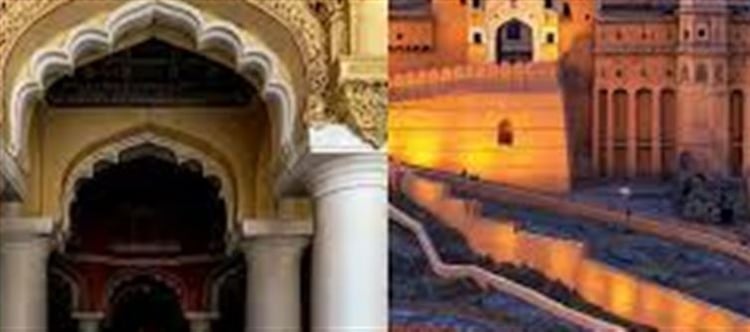

India’s royal history is beautifully preserved in its ancient palaces, which showcase the power, culture, and architectural brilliance of bygone eras. These palaces, some centuries old, continue to fascinate visitors with their grandeur, intricate designs, and historical significance.
1. City Palace, jaipur (Rajasthan)
· Constructed in 1727 by Maharaja Sawai jai Singh II.
· A magnificent blend of Rajput, Mughal, and european architectural styles.
· Houses museums, courtyards, and royal residences.
2. mysore Palace (Karnataka)
· Built in the 14th century, with the current structure completed in 1912.
· Known for its intricate domes, arches, and expansive Durbar Hall.
· Famous for the Dussehra festival celebrations.
3. Umaid Bhawan Palace (Jodhpur, Rajasthan)
· Constructed between 1928–1943 under Maharaja Umaid Singh.
· One of the largest private residences in the world.
· Combines art deco and Indo-Saracenic architectural styles.
4. Falaknuma Palace (Hyderabad, Telangana)
· Built in 1893 by Nawab Viqar-ul-Umra.
· Reflects Italian and Tudor architecture, with stunning interiors and frescoes.
· Now partly a luxury hotel and museum.
5. Lalitha Mahal Palace (Mysore, Karnataka)
· Constructed in 1921 for the Viceroy of India.
· Designed in European Renaissance style, resembling an Italian palace.
· Surrounded by beautifully landscaped gardens.
6. Hawa Mahal (Jaipur, Rajasthan)
· Built in 1799 by Maharaja Sawai Pratap Singh.
· Famous for its pink sandstone façade with 953 small windows (jharokhas).
· Allowed royal women to observe street life without being seen.
7. Chowmahalla Palace (Hyderabad, Telangana)
· Built in the 18th century by the Nizams.
· Known for its unique courtyards, fountains, and Persian-influenced architecture.
· Served as the official seat of the Nizam of Hyderabad.
Conclusion
India’s oldest palaces are more than just royal residences—they are living testaments to the country’s rich history, culture, and architectural mastery. Visiting these palaces offers a glimpse into the luxurious lifestyles of indian royalty and the artistic brilliance of the era.
Disclaimer:
The views and opinions expressed in this article are those of the author and do not necessarily reflect the official policy or position of any agency, organization, employer, or company. All information provided is for general informational purposes only. While every effort has been made to ensure accuracy, we make no representations or warranties of any kind, express or implied, about the completeness, reliability, or suitability of the information contained herein. Readers are advised to verify facts and seek professional advice where necessary. Any reliance placed on such information is strictly at the reader’s own risk..jpg)
 click and follow Indiaherald WhatsApp channel