


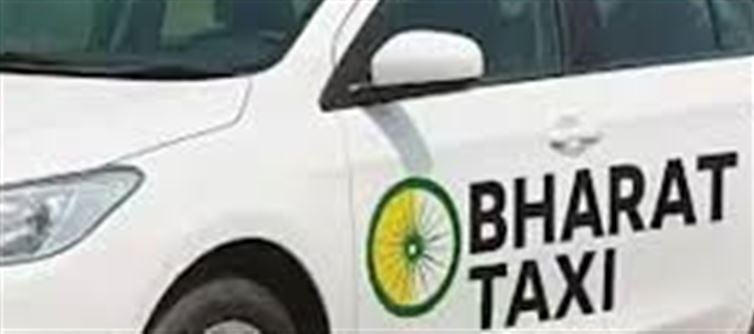

India officially launched Bharat Taxi, the country’s first cooperative‑model ride‑hailing platform, marking a major development in the urban mobility sector. The service was inaugurated by Union home and Cooperation minister Amit Shah in New delhi as a government‑backed alternative to private cab aggregators like Ola, Uber, and Rapido.
🛞 What Is Bharat Taxi?
Bharat Taxi is a ride‑hailing platform built on a cooperative ownership model in which drivers themselves are stakeholders — called “Sarathis” — rather than mere contract workers. Unlike traditional app‑based taxi services where companies take commissions, Bharat Taxi operates on a zero‑commission, surge‑free pricing model designed to benefit drivers and passengers alike.
The cooperative is registered under the Multi‑State Cooperative Societies Act, 2002, and was established in mid‑2025 with support from major cooperative institutions across India.
🚕 Key Features & Unique Model
1. Driver‑Centric Cooperative Structure
Drivers are members and co‑owners of the platform, not just service providers.
Profits are shared directly with drivers instead of being siphoned off as corporate commissions — a stark contrast to models used by Ola, Uber, or Rapido.
2. zero Commission & No Surge Pricing
The platform charges no commission on driver earnings.
Surge pricing — common in private aggregator apps — is non‑existent, making travel costs predictable and generally lower for passengers.
3. Affordable Fares
Official statements suggest fares could be up to ~30% cheaper than existing services due to the cooperative model and lack of commission and surge charges.
4. Social Security & Benefits
Drivers receive social security support — including personal accident insurance, family health coverage, retirement plans, and dedicated driver support systems.
5. Flexible Integration
Sarathis retain the freedom to work on other platforms.
The service integrates with national wallet PLATFORM' target='_blank' title='digital-Latest Updates, Photos, Videos are a click away, CLICK NOW'>digital infrastructure like DigiLocker and UMANG to streamline user verification and booking operations.
📍 Current Rollout and Expansion Plans
Initial Operations:
The service is launched in the Delhi‑NCR region and parts of Gujarat following a successful pilot phase that began in december 2025.
Driver and Ride Footprint:
Over 300,000 drivers have already joined the platform.
More than 100,000 users have registered on the app, with around 10,000 daily rides being completed in pilot areas.
Approximately ₹10 crore has been distributed directly to drivers.
Nationwide Growth:
The government plans to expand Bharat Taxi across all indian states and Union Territories within the next two‑three years, including the establishment of dedicated support centers for drivers and passengers.
🛠️ Competing with Private Aggregators
Bharat Taxi positions itself as a homegrown, equitable competitor to global and private indian ride‑hailing apps. By ensuring drivers retain more of their earnings and passengers pay fairer, more transparent fares, the cooperative hopes to reshape the urban mobility landscape.
Experts and unions have welcomed the move, noting that it could challenge exploitative practices like high commission charges and unpredictable pricing often seen in private platforms.
🧭 What This Means for drivers and Riders
Drivers: Become direct stakeholders in the business they help run, with ownership, insurance, and support benefits.
Riders: Get access to lower, more transparent fares and a new choice beyond the near‑duopoly of major private apps.
Market: This cooperative entry may spur competition and encourage better conditions and pricing across the ride‑hailing sector.
📌 In Summary
Bharat Taxi isn’t just another taxi app — it’s a first‑of‑its‑kind cooperative ride‑hailing platform in India aimed at empowering drivers, reducing costs for passengers, and bringing a community‑driven alternative to existing models. With strong government backing and ambitious expansion plans, it could be a game‑changer in India’s mobility market over the coming years.
Disclaimer:
The views and opinions expressed in this article are those of the author and do not necessarily reflect the official policy or position of any agency, organization, employer, or company. All information provided is for general informational purposes only. While every effort has been made to ensure accuracy, we make no representations or warranties of any kind, express or implied, about the completeness, reliability, or suitability of the information contained herein. Readers are advised to verify facts and seek professional advice where necessary. Any reliance placed on such information is strictly at the reader’s own risk.
 click and follow Indiaherald WhatsApp channel