


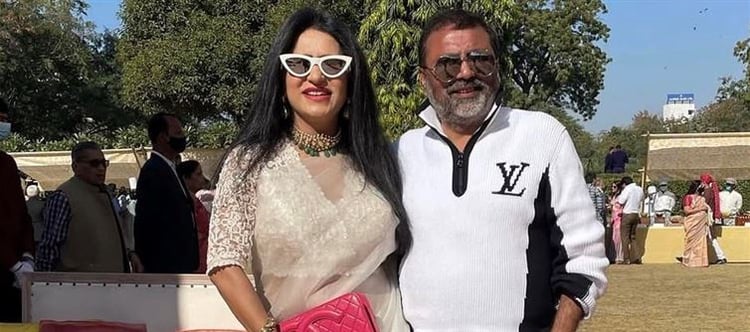

WHEN WORDS AND WARDROBES COLLIDE
Politics thrives on messaging. National pride, economic self-reliance, and “vocal for local” campaigns have become powerful slogans. But when a public figure strongly endorses indian brands — and criticizes others as “anti-national” for not wearing them — optics matter.
The spotlight now falls on Nishikant Dubey, a bjp mp representing Godda in jharkhand — one of India’s economically struggling states — who has publicly positioned himself as a champion of the poor and an advocate of indigenous products.
Critics argue there’s a disconnect between rhetoric and lifestyle.
Let’s examine the contrast.
1️⃣ The Constituency Reality
Godda, in jharkhand, faces persistent development challenges — infrastructure gaps, employment struggles, and poverty indicators that demand focused leadership.
When an mp speaks about working for the downtrodden, expectations are high. Authenticity matters. Symbolism matters.
Because representation is not just legislative.
It’s moral.
2️⃣ The Swadeshi Messaging
Public endorsements of indian brands, calls for economic nationalism, and criticism of those who don’t “support domestic products” form part of a broader ideological narrative.
The message is clear:
Buy Indian. Wear Indian. Promote Indian.
That message resonates strongly with supporters who see consumption as patriotic participation.
3️⃣ The Wardrobe Question
Critics point out that Dubey has been photographed wearing:
Louis Vuitton (France)
Saint Laurent (YSL) (France)
Cartier eyewear (France)
Hermès shoes (France)
And reportedly using the latest iphone (USA)
Luxury global brands.
This is where the accusation of hypocrisy emerges.
Because when messaging promotes swadeshi identity as moral superiority — but personal choices reflect global luxury consumption — the gap becomes political ammunition.
4️⃣ Hypocrisy or Personal Freedom?
To be fair, no law prevents any mp from wearing international brands.
Personal spending is personal choice.
But when leaders frame consumer behavior as nationalist duty — and shame others for not complying — their own choices invite scrutiny.
If swadeshi is a principle, it must apply universally.
If it is merely rhetoric, voters will notice.
5️⃣ The Optics Problem
In modern politics, optics are substance.
A leader representing one of India’s poorer regions, photographed in high-end european labels, while publicly criticizing others’ purchasing decisions, creates a perception problem.
Perception may not equal reality.
But perception shapes credibility.
6️⃣ The Larger Conversation: Nationalism and Consumption
This debate is bigger than one MP.
It touches on a broader question:
Is nationalism about personal lifestyle policing — or about policy reform?
Encouraging domestic manufacturing is policy.
Shaming individuals for brand choices is politics.
And when politicians engage in that politics, their own closets become fair game.
🎯 THE CORE ISSUE
The point is not whether a public representative wears Louis Vuitton or Hermès.
The point is consistency.
If you champion swadeshi values, practice them visibly.
If you call others anti-national for foreign brands, hold yourself to the same standard.
Because voters are not blind.
Social media is not forgetful.
And contradictions travel faster than speeches.
Leadership demands coherence.
If you preach local, live local.
Otherwise, the message turns into a meme.
And in politics, memes are merciless.
 click and follow Indiaherald WhatsApp channel