



WHEN OUTREACH MEETS election SEASON
Political leaders interact with students all the time. It’s good optics. It’s aspirational. It signals engagement with the future.
But timing is everything in politics.
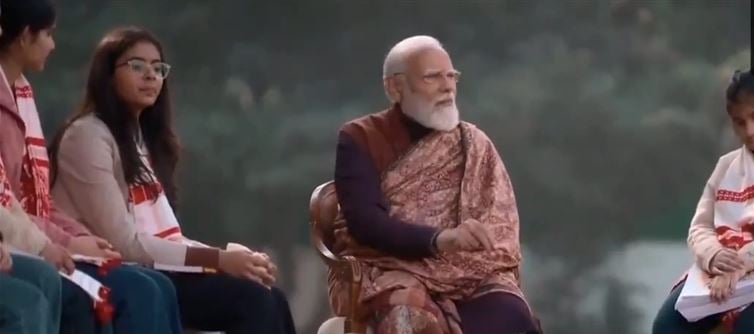
When prime minister Narendra Modi chose to interact with students from assam — just months before a crucial state election — it sparked an obvious question:
Was this national outreach?
Or regional strategy wrapped in youthful energy?
In politics, coincidence is rare currency.
1️⃣ The Geography of Choice: Why Assam?
India has dozens of politically significant states.
He could have chosen Uttar Pradesh.
He could have chosen Madhya Pradesh.
He could have chosen Karnataka.
He could have chosen Andhra Pradesh.
But assam — where elections loom in roughly three months — suddenly became the stage.
In isolation, it’s a routine engagement.
In context, it feels strategic.
election calendars often shape political visibility more than policy calendars.
2️⃣ The Gamchha Moment: Cultural Symbol or Campaign Signal?
The Assamese gamocha (often spelled gamchha) is more than fabric. It’s a symbol of identity, pride, and tradition.
Spot it in a political event, and it carries meaning.
If the students were indeed from assam, the presence of gamochas makes cultural sense. If not, it raises eyebrows.
politics understands visual language deeply.
Cultural symbols in televised interactions aren’t random wardrobe accidents.
They’re signals.
And signals matter most during election season.
3️⃣ Outreach vs Optics: The Thin Line
Engaging with students is universally positive. It projects accessibility and inspiration.
But when such interactions align neatly with upcoming state polls, critics interpret them differently:
Is it governance?
Is it ground-building?
Is it early-stage campaigning?
The difference lies in intent — and perception.
In modern politics, perception often wins.
4️⃣ election Gravity: Everything Tilts Toward the Polls
assam is politically crucial for the BJP’s Northeast strategy. Strengthening regional momentum has national implications.
When the prime minister appears in a state months before voting, it energizes cadre networks, reminds voters of central leadership, and reinforces political presence.
That doesn’t automatically make it cynical.
But it certainly makes it strategic.
5️⃣ The rahul gandhi Contrast
Critics argue that not every public engagement should be politicized. They point to rahul gandhi and his campus interactions as examples of conversations framed more as dialogue than electoral choreography.
Supporters of Modi counter that every leader times visits with political awareness — and that’s simply how democracy functions.
The debate, then, isn’t about whether politics exists in outreach.
It’s about how visible that politics becomes.
6️⃣ The Real Question: Can Anything Be Apolitical in election Year?
India operates in near-permanent campaign mode. With state elections scattered across the calendar, political leaders are almost always within months of a poll somewhere.
That reality complicates outrage.
Is it opportunism — or just political rhythm?
Is it manipulation — or mobilization?
Democracy is competitive by design. Leaders seek advantage. Opposition seeks exposure.
What changes is the lens through which the public views it.
🎯 The Bottom Line
students deserve engagement beyond electoral calculus.
States deserve attention beyond voting cycles.
But in indian politics, timing is rarely innocent.
Whether this was genuine youth outreach or subtle campaign signaling depends on where you stand politically.
One thing is certain:
In election season, even a gamchha becomes a headline.
And in today’s India, nothing — not even a student interaction — escapes political interpretation.
 click and follow Indiaherald WhatsApp channel