


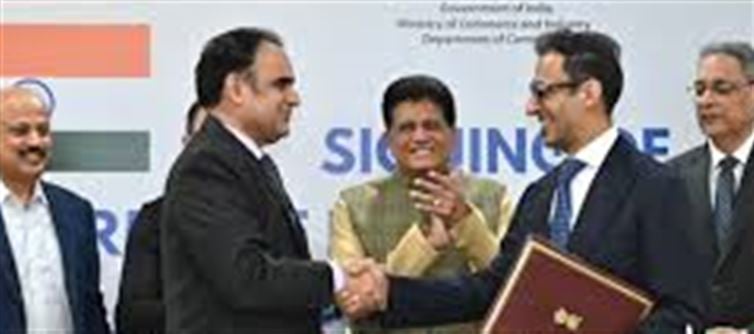

In a significant development aimed at enhancing economic ties and fostering trade relations, India and the Gulf Cooperation Council (GCC) have officially started negotiations for a Free Trade Agreement (FTA). This move holds great potential for both regions, marking a step toward deeper economic cooperation, reduced tariffs, and increased market access. Let’s dive into the details of this partnership and understand what it means for both sides.
1. What is the India-GCC Free Trade Agreement (FTA)?
A Free Trade Agreement (FTA) is a pact between two or more countries that aims to reduce or eliminate barriers to trade, such as tariffs, duties, and quotas on goods and services. The goal of such agreements is to promote trade, improve economic relations, and create a more conducive environment for businesses to operate in.
In this case, the India-GCC FTA will be a trade agreement between India and the Gulf Cooperation Council (GCC), which includes six member countries:
Saudi Arabia
United Arab Emirates (UAE)
Kuwait
Oman
Qatar
Bahrain
This FTA is expected to open up new opportunities for trade, investment, and economic integration between india and the GCC nations.
2. Why is the India-GCC FTA Important?
The GCC region has long been an important economic partner for india, especially with respect to oil exports, remittances from indian workers, and trade in non-oil goods. The start of FTA negotiations presents several key advantages for both sides:
2.1. Strengthening Bilateral Trade
Increased trade volume: An FTA will likely lead to higher trade volumes between india and GCC nations by eliminating tariffs on a wide range of products. This will make it easier and more cost-effective for businesses to trade goods such as petroleum products, machinery, pharmaceuticals, textiles, and agricultural products.
Diversified trade: While oil remains a significant component of trade, an FTA will facilitate the export of non-oil products from india to GCC countries, such as automobiles, technology, and consumer goods. This diversification of trade can help reduce dependency on oil exports.
2.2. Economic Growth and job Creation
Boost to job creation: The FTA can help foster industries that create employment opportunities in sectors like manufacturing, infrastructure, and services. With improved market access, businesses in both india and the GCC region are likely to expand, leading to job growth.
Investment opportunities: A more open trade environment will likely attract foreign direct investment (FDI) into india, as well as enable GCC countries to invest in India's growing market. Similarly, indian businesses can look to tap into opportunities in the GCC region.
2.3. Stronger Economic Integration
Enhancing cooperation: This agreement will create a framework for deeper economic cooperation beyond just trade. It could foster collaborations in areas such as energy, tourism, healthcare, education, and technology.
Aligning trade policies: By negotiating common trade policies, both india and the GCC countries can align their economic strategies, ensuring smoother business operations across borders.
3. Key Areas of Focus for the India-GCC FTA
The India-GCC FTA is expected to focus on several key sectors and areas to maximize the benefits of the agreement:
3.1. Trade in Goods
The primary focus of the FTA is to enhance the trade of goods between the two regions by reducing tariffs and non-tariff barriers. Key products likely to benefit include:
Oil and Gas: As oil remains a major export from the GCC countries to india, the FTA can ensure better access to energy resources for india while helping GCC nations secure long-term demand for their oil exports.
Textiles and Apparel: india is a major exporter of textiles and garments, and the FTA will help reduce tariffs and improve market access for these products in GCC countries.
Pharmaceuticals: india has a strong pharmaceutical industry, and the FTA could enable Indian pharmaceutical companies to export medicines and healthcare products more easily to the GCC region.
3.2. Trade in Services
Both india and GCC nations have a well-established services sector. For india, the services industry represents a significant portion of its GDP, and an FTA could open new markets for services such as:
Information technology (IT): indian IT companies will benefit from enhanced market access for software services, business outsourcing, and other IT-enabled services.
Education and Training: india has a wealth of educational institutions and skilled workers, and this FTA could boost education exports to the GCC, especially in areas like engineering, medicine, and management.
Tourism and Hospitality: india could see a rise in tourist visits from the GCC region, and the agreement may also create opportunities for collaboration in the hospitality industry.
3.3. Investment and Technology
Foreign direct investment (FDI): The FTA could facilitate increased FDI from the GCC region into indian sectors like infrastructure, retail, and renewable energy.
Technology transfer: india could benefit from the transfer of advanced technologies, particularly in fields such as energy, renewable resources, and infrastructure development.
3.4. Customs Cooperation and Regulatory Alignment
The FTA will also work to harmonize customs procedures, making it easier for businesses to navigate the regulatory environment. This would also involve intellectual property rights (IPR) and standards for products to ensure smoother trade flows.
4. Benefits for india and GCC Countries
Benefits for India:
Market Access: india will have better access to the GCC market, which is home to some of the wealthiest nations in the world.
Diversified Trade: The FTA will reduce India's reliance on oil and diversify trade into sectors like technology, pharmaceuticals, and agriculture.
Employment and Skill Development: indian workers and businesses can access better employment opportunities and gain access to better technology and infrastructure development.
Boost to Exports: The FTA will improve India's export potential and reduce the costs of products shipped to the GCC region.
Benefits for GCC Countries:
Boost to Non-Oil Exports: The GCC can tap into India's vast market for non-oil goods, such as luxury goods, automobiles, and agricultural products.
Enhanced Investment: The agreement will help attract more Indian investments into the GCC region, particularly in industries such as finance, IT, and construction.
Improved Infrastructure and Connectivity: The FTA may facilitate greater infrastructure development and better logistical coordination between india and the GCC region.
5. Conclusion
The launch of negotiations for the India-GCC Free Trade Agreement (FTA) is a pivotal moment for both regions, holding great potential to boost economic cooperation and trade relations. As both sides work toward finalizing the details, the agreement will likely create new opportunities for businesses, enhance investment flows, and stimulate economic growth in both regions.
With the GCC countries already playing a crucial role in India’s energy needs and remittance inflows, this FTA will help unlock further economic opportunities, making it a win-win situation for india and the gulf Cooperation Council.
Stay tuned for updates on the negotiation process and further developments regarding the India-GCC FTA.
Disclaimer:
The views and opinions expressed in this article are those of the author and do not necessarily reflect the official policy or position of any agency, organization, employer, or company. All information provided is for general informational purposes only. While every effort has been made to ensure accuracy, we make no representations or warranties of any kind, express or implied, about the completeness, reliability, or suitability of the information contained herein. Readers are advised to verify facts and seek professional advice where necessary. Any reliance placed on such information is strictly at the reader’s own risk.
 click and follow Indiaherald WhatsApp channel