


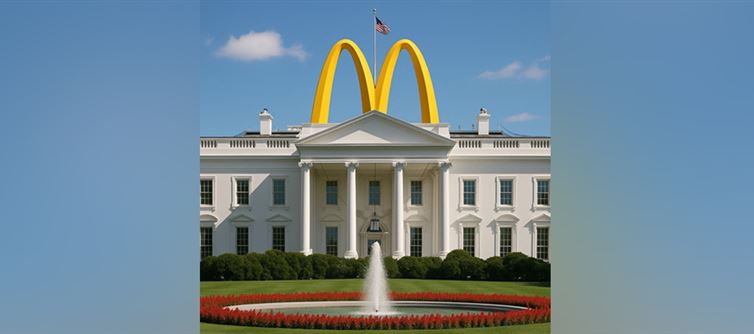

But peel back the sesame seed bun of this spectacle, and you'll find a savage underbelly: a billionaire showman hawking fast-food fixes for a nation choking on $7 Big Macs and 40% rent hikes, all while franchise fat cats sip champagne behind the flippers. This isn't governance—it's a grotesque golden calf worship, where patriotism meets portion control in a brutal battle for your last crumpled dollar. Buckle up, America; your next president's menu is served with a side of scorched-earth hypocrisy, and it's hotter than the oil it's fried in.
“The Day politics Started Smelling Like Fry Oil”
There are moments in history carved into marble…
and then some moments feel deep-fried and served in a paper bag.
In an era where symbols sell harder than policy and branding beats budgeting, a summit blending politics, inflation anxiety, and corporate fast-food optimism isn’t just strange — it’s a headline written in neon irony.
Welcome to America’s newest trilogy:
Marketing → Messaging → Manufactured Hope™.
Grab your tray. No substitutions. No refunds.
“Four Courses of Capitalist Catastrophe”
1️⃣ The Arches & The Anthem: When Branding Wears the Flag Like a Cape
Political imagery has always used symbolism — but pairing national identity with corporate icons rewrites the stage from democracy to franchise theater.
Whether intended as optimism, nostalgia, or just meme-era politics, it sends a message that hits differently in a country where millions measure groceries item by item.
2️⃣ The Supersized Summit: Populism, but Make It Drive-Thru
Offering value meals as inflation relief is compelling marketing psychology, but economic policy cannot be served via combo numbers and QR coupons.
If fast food becomes policy symbolism, then hunger isn’t addressed — it’s rebranded.
3️⃣ The Blame Burger: Last Administration, Extra Sauce
Economic pain becomes political currency, and inflation narratives become campaign ingredients.
But history isn’t a hamburger — flipping it doesn’t make it new.
4️⃣ The Franchise Finale: When Profit Meets Patriotism At The Cash Register
Franchises may represent entrepreneurship, but not all franchises bring wealth mobility — some bring debt traps, razor-thin margins, mandatory renovations, and marketing fees.
When public hope becomes corporate deliverable, citizens risk being customers instead of stakeholders.
🎤 Closing Mic-Drop
America doesn’t need cheaper fries — it needs cheaper futures.
The problem is not the meal price.
The problem is that policy is designed like advertising.
When politics becomes branding, citizens become the target audience, not beneficiaries.
 click and follow Indiaherald WhatsApp channel