


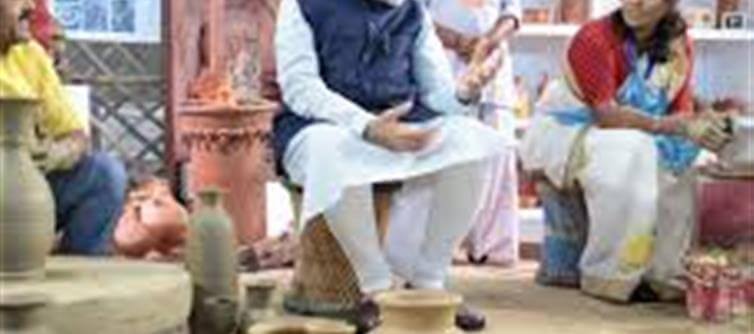

The PM Vishwakarma Scheme is a Central Sector Scheme launched by the government of india to empower traditional artisans and craftspeople who work with their hands and tools in family‑based trades. It provides end‑to‑end support, including recognition, training, financial support, tool assistance, market linkages, and wallet PLATFORM' target='_blank' title='digital-Latest Updates, Photos, Videos are a click away, CLICK NOW'>digital incentives — all aimed at elevating artisans into the formal economy and improving their income opportunities.
📌 What the Scheme Aims to Do
Traditional artisans, often part of India’s informal sector, possess valuable family‑based skills passed down through generations. The PM Vishwakarma Scheme is designed to:
- Recognise artisans and craftspeople officially as “Vishwakarmas”.
- Provide a complete support ecosystem — from training to market access.
- Help them scale up businesses, adopt modern tools and technologies, and move up the value chain.
- Integrate their products into domestic and global markets.
- Include women, marginalised communities and artisans from rural and urban areas.
This nationwide initiative is fully funded by the government of india with a total outlay of ₹13,000 crore, and will be implemented over multiple years up to 2027‑28.
🛠️ Who Can Benefit: 18 Covered Trades
The scheme covers 18 traditional trades — artisans and craftspersons actively engaged in these occupations are eligible for benefits:
Carpenter (Suthar/Badhai)
Boat maker
Armourer
Blacksmith (Lohar)
Hammer or tool kit maker
Locksmith
Goldsmith (Sonar)
Potter (Kumhaar)
Sculptor & stone carver
Stone breaker
Cobbler / Shoesmith
Mason (Rajmistri)
Basket / Mat / Broom maker / Coir weaver
Doll & toy maker (traditional)
Barber (Naai)
Garland maker (Malakaar)
Washerman (Dhobi)
Tailor (Darzi)
Fishing net maker
These trades reflect centuries‑old skills that form a vital part of India’s cultural and economic heritage.
💡 Key Benefits of the Scheme
🎓 1. Skill Training & Stipend
Beneficiaries receive basic and advanced training to upgrade traditional skills with modern techniques. During training, they may receive a stipend to support them financially while learning.
🔧 2. Toolkit Incentive
Artisans receive e‑vouchers up to ₹15,000 to buy improved toolkits and equipment essential for their trade.
💸 3. Financial Support / Loans
The scheme provides collateral‑free “Enterprise Development Loans” at a concessional interest rate of 5%, with a total assistance of up to ₹3 lakh in two tranches — ₹1 lakh for initial support and ₹2 lakh after successful repayment and wallet PLATFORM' target='_blank' title='digital-Latest Updates, Photos, Videos are a click away, CLICK NOW'>digital adoption.
📲 4. wallet PLATFORM' target='_blank' title='digital-Latest Updates, Photos, Videos are a click away, CLICK NOW'>digital Transactions Incentive
To encourage wallet PLATFORM' target='_blank' title='digital-Latest Updates, Photos, Videos are a click away, CLICK NOW'>digital business, beneficiaries earn Re 1 per wallet PLATFORM' target='_blank' title='digital-Latest Updates, Photos, Videos are a click away, CLICK NOW'>digital transaction (up to 100 transactions a month) credited back to their account — boosting cashless payments.
🛍️ 5. Marketing & Market Access Support
Artisans get help with quality certification, branding, e‑commerce onboarding (e.g., GeM, ONDC, other platforms), participation in fairs, and wider market linkages, helping them sell products across india and internationally.
🧾 6. Recognition & Identity Card
Registered beneficiaries receive an official PM Vishwakarma certificate and ID card, increasing visibility and credibility of their craft.
👥 Who Is Eligible?
To qualify for benefits under the scheme:
- You must be 18 years or older.
- You should be actively engaged in one of the 18 traditional trades on a self‑employed basis.
- You should not have taken similar government self‑employment loans (e.g., PMEGP, PM SVANidhi, Mudra) in the past five years — unless fully repaid.
- Benefits are limited to one member per family.
- Government employees and their immediate family members are not eligible.
🌟 Impact So Far
Since its rollout, the scheme has made significant strides:
- Over 30 lakh artisans registered as beneficiaries.
- More than 23 lakh artisans trained to improve skills and efficiency.
- Digital payment incentives worth over ₹22 crore credited to artisans’ accounts.
- Thousands of artisans have been connected with online and institutional buyers, expanding economic opportunities.
📍 Extra Support & Events
To further boost visibility and income:
- Events like PM Vishwakarma Haat 2026 have been organised at places such as Dilli Haat in New Delhi, offering artisans a national platform to showcase and sell their crafts to the public.
- Partnerships with private platforms (e.g., Amazon) are helping artisans access nationwide online markets.
🧠 Why This Matters
The PM Vishwakarma Scheme is more than just financial aid — it is transformative. It helps preserve India’s rich cultural craftsmanship, formalises traditional skills, and creates sustained economic opportunities for millions of artisans in both rural and urban areas. By tying skills to wallet PLATFORM' target='_blank' title='digital-Latest Updates, Photos, Videos are a click away, CLICK NOW'>digital business, marketing support, and affordable credit, the scheme ensures that artisans are better paid, better protected, and more connected to modern markets than ever before.
Disclaimer:
The views and opinions expressed in this article are those of the author and do not necessarily reflect the official policy or position of any agency, organization, employer, or company. All information provided is for general informational purposes only. While every effort has been made to ensure accuracy, we make no representations or warranties of any kind, express or implied, about the completeness, reliability, or suitability of the information contained herein. Readers are advised to verify facts and seek professional advice where necessary. Any reliance placed on such information is strictly at the reader’s own risk.
 click and follow Indiaherald WhatsApp channel