


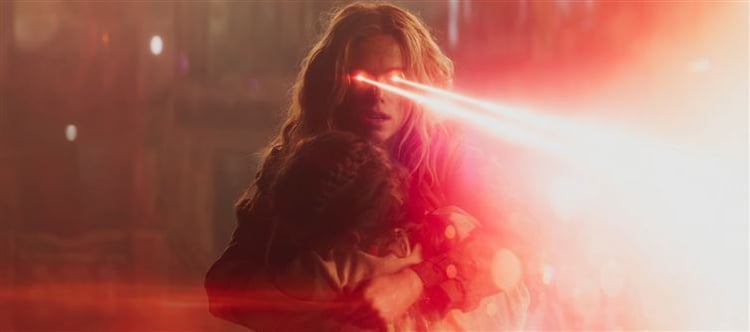

DC Studios is doing what it promised—testing, tweaking, and course-correcting early. But the first reactions from Supergirl’s test screening reveal a familiar DC dilemma: a strong hero, standout moments, and a villain that fails to land.
With the film still months away from release, early reports paint a picture that’s neither disastrous nor triumphant—a movie hovering between “good” and “almost great.” And in the fragile early days of james Gunn’s DCU, that distinction matters more than ever.
1️⃣ TEST SCREENINGS BEGIN — AND THE SIGNALS ARE MIXED
Industry insider Daniel Richtman initially sparked optimism, claiming he’d “heard nothing but good things.” But another trusted source, @Cryptic4KQual, quickly grounded expectations.
According to reports:
Runtime clocks in at roughly 2 hours 5 minutes
Feedback is mixed, not bad
Some sequences shine
Others struggle to leave an impact
This isn’t panic territory—but it’s not a slam dunk either.
2️⃣ MILLY ALCOCK EMERGES AS THE FILM’S BIGGEST WIN
If there’s one consensus, it’s this: Milly Alcock delivers.
Her performance as Kara Zor-El is reportedly the movie’s strongest asset, with multiple reactions praising her emotional range and screen presence. For a character making her full DCU debut, that’s not just encouraging—it’s crucial.
DC doesn’t need another iconic symbol.
It needs a character audiences want to follow.
3️⃣ LOBO MAKES NOISE — BUT KEEPS IT BRIEF
Jason Momoa’s Lobo appears in two fight scenes, and that alone has fans buzzing. While his screen time is limited, the character reportedly makes a strong impression—setting the stage for a larger DCU future.
This feels intentional:
Introduce the chaos
Tease the potential
Don’t overshadow Kara
In other words, Lobo is being positioned as a weapon for later, not a distraction now.
4️⃣ THE VILLAIN PROBLEM STRIKES AGAIN
Here’s the red flag.
The film’s antagonist, Krem of the Yellow Hills, is already being labeled “underwhelming.” That’s a dangerous word in superhero cinema.
Despite Matthias Schoenaerts’ talent, early reactions suggest the character feels:
Generic
Low-impact
Lacking menace
DC has suffered repeatedly from forgettable villains—and this reaction suggests the problem may not be fully solved yet.
5️⃣ DC HAS BEEN HERE BEFORE — AND SURVIVED
It’s worth remembering: Superman also received mixed test-screening reactions.
Yet the final film went on to:
Score 83% on Rotten Tomatoes
Win over fans
Stabilize confidence in the DCU reboot
Early feedback is diagnostic, not definitive. The entire purpose of test screenings is to identify weak points—and villains are often the easiest fix.
6️⃣ RESHOOTS, REWRITES, AND REALITY CHECKS
DC Studios now has time—and data.
Villain tweaks, pacing adjustments, and tonal refinements are all still possible. That said, Schoenaerts’ availability could limit how much the antagonist is reshaped.
This puts pressure on:
Editing
Music
Story emphasis
If the villain can’t be strengthened, the film must outperform him everywhere else.
7️⃣ “GOOD, NOT GREAT” MIGHT BE ENOUGH — FOR NOW
In the shadow of the DCEU’s failures, DC no longer needs perfection. It needs:
Consistency
Likeable leads
Coherent storytelling
If Supergirl delivers a compelling Kara Zor-El, teases a larger universe, and avoids creative chaos, that may be a victory in itself.
⚠️ FINAL WORD: SUPERGIRL IS A TEST — NOT JUST A MOVIE
This film isn’t just about Kara Zor-El.
It’s about whether the DCU can learn, adjust, and improve in real time.
Strong lead? ✔️
Exciting future characters? ✔️
Weak villain? ⚠️
DC has time to fix what doesn’t work.
What matters is whether they actually do.
Because in this reboot era, “almost great” is still a risk DC can’t afford for long.
 click and follow Indiaherald WhatsApp channel