


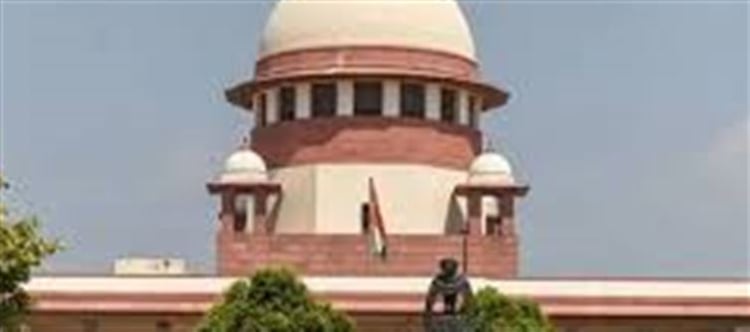

The Supreme court of India has taken strict exception to certain content in a Class 8 Social Science textbook published by the National Council of Educational Research and Training (NCERT) that refers to “corruption in the judiciary.” The Chief Justice of india (CJI) expressed deep concern, stating that the court cannot allow any attempt to defame the judiciary — an institution at the core of India’s democratic framework.
📚 What Triggered the Controversy?
The controversy centres on a newly revised Class 8 political science textbook that includes a section discussing “corruption in the judiciary” and lists systemic challenges such as case backlogs, shortage of judges, and procedural issues. This content was part of the chapter titled “The Role of the Judiciary in Our Society.”
Senior advocates brought the matter to the supreme Court’s attention, arguing that:
- Teaching students about judicial corruption at the school level is deeply concerning.
- The chapter singles out the judiciary without similar mentions of other institutions like legislatures or the executive.
📍 CJI’s Strong Words in Court
In open court, CJI surya Kant stated emphatically:
“I will not allow anyone on earth to defame the institution.” – CJI surya Kant
He said that he had been receiving calls and messages from across the legal fraternity, including high court judges, expressing serious concern. The CJI took suo motu (on his own motion) cognisance of the matter and said the law would take its course.
The Bench — also comprising Justices Joymalya Bagchi and vipul M. Pancholi — described the issue as a matter of grave concern and even remarked that portions of the textbook might go against the basic structure of the Constitution.
⚖️ What Does Suo Motu Take‑Up Mean?
When the supreme court takes suo motu cognisance, it means the court has decided to consider a matter on its own, without a formal petition being filed. In this case:
- The court will examine whether the textbook content undermines the dignity and independence of the judiciary.
- It could direct NCERT to revise or clarify the content if found problematic.
🧠 Key Arguments Raised in Court
🔹 Against Judicial Corruption Reference
Senior Advocate Kapil Sibal told the court that teaching class 8 students about corruption in the judiciary was inappropriate and scandalous.
🔹 Selectivity Issue
Another senior advocate, Abhishek Manu Singhvi, pointed out that the textbook does not similarly address corruption in politics or bureaucracy, raising questions about selectivity in educational content.
🔹 Impact on Students
Authorities raised concerns that such content might create a negative perception among young students about the credibility of the judiciary.
🧩 Broader Implications
This issue has touched on larger debates including:
- Academic freedom vs. institutional integrity
- How educational content should be framed when discussing public institutions
- Responsibility in shaping young minds without undermining constitutional pillars
📌 Final Takeaway
The supreme Court’s strong reaction underscores the sensitivity around how constitutional institutions like the judiciary are discussed in school curricula. By taking suo motu cognisance and declaring that defamation of the judiciary won’t be permitted, the CJI has signalled that educational content must balance critical discussion with institutional respect and factual context.
Disclaimer:
The views and opinions expressed in this article are those of the author and do not necessarily reflect the official policy or position of any agency, organization, employer, or company. All information provided is for general informational purposes only. While every effort has been made to ensure accuracy, we make no representations or warranties of any kind, express or implied, about the completeness, reliability, or suitability of the information contained herein. Readers are advised to verify facts and seek professional advice where necessary. Any reliance placed on such information is strictly at the reader’s own risk.
 click and follow Indiaherald WhatsApp channel