
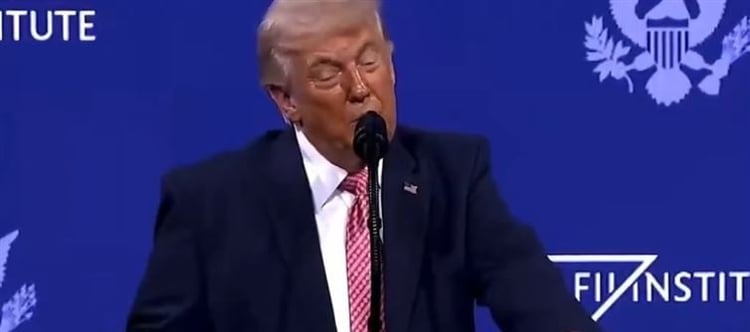


WHEN WORDS HIT HARDER THAN POLICY
 Diplomacy is usually measured, careful, and deliberate. It’s built on tone as much as action. But every now and then, a single unscripted remark cuts through years of strategic alignment. That’s exactly what happened when donald trump spoke about Mohammed bin salman — and the reaction wasn’t just about what he said, but what it signaled.
1. The Comment That Turned Heads
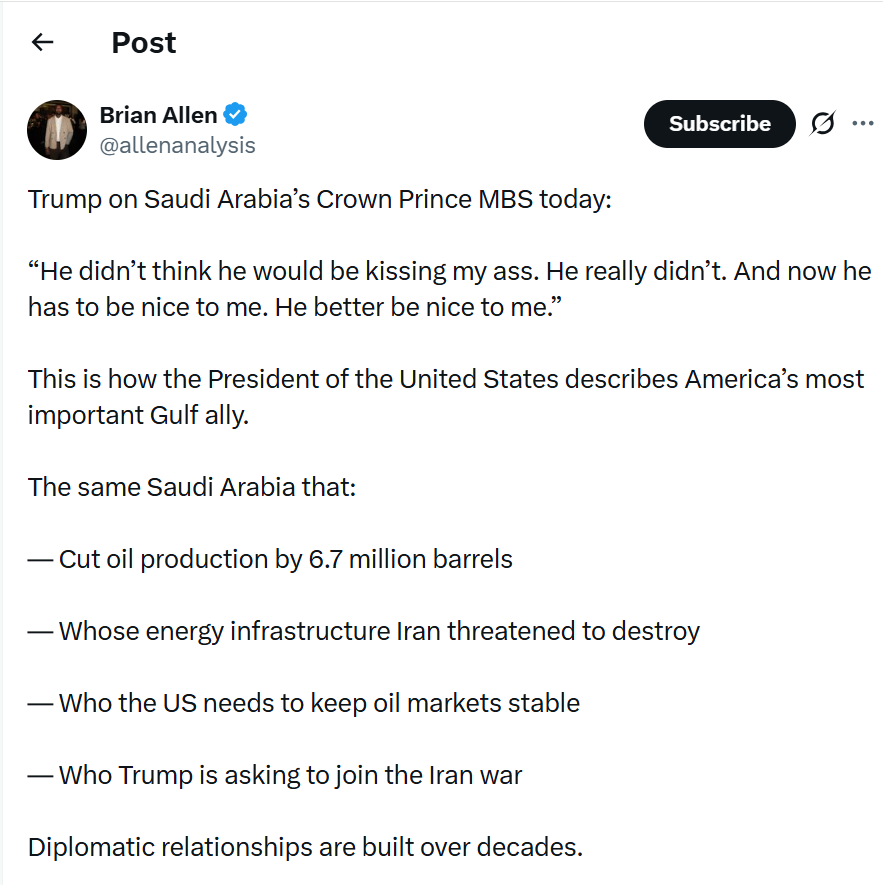
Speaking publicly, trump described the Saudi Crown prince in unusually blunt and personal terms — suggesting a dynamic of dominance rather than partnership. It wasn’t subtle. And it wasn’t private. It was said on camera, with global audiences watching.
2. The Ally at the Center of It All
This isn’t just any relationship. saudi arabia remains one of Washington’s most critical partners in the gulf — especially when it comes to stabilizing oil markets and managing regional tensions involving Iran.
3. Timing That Raises Eyebrows
The remark comes at a moment when the US needs cooperation, not friction. Energy stability, security coordination, and broader geopolitical alignment all depend on maintaining trust. Publicly undercutting that relationship adds a layer of uncertainty.
4. Diplomacy vs Personal Style
There’s always been a contrast between traditional diplomacy and Trump’s more direct, confrontational tone. Supporters see it as a strength. Critics see it as a risk. But in alliances built over decades, perception matters — sometimes as much as policy itself.
5. The Optics Problem
When a leader speaks this way about a key ally, it doesn’t just stay between two countries. It’s heard by every other partner, every rival, and every observer trying to gauge stability and reliability.
BOTTOM LINE
This isn’t just about one controversial comment. It’s about how relationships are managed under pressure. Because in global politics, respect, leverage, and trust are constantly being negotiated — and sometimes, a single sentence can shift that balance.
 click and follow Indiaherald WhatsApp channel