


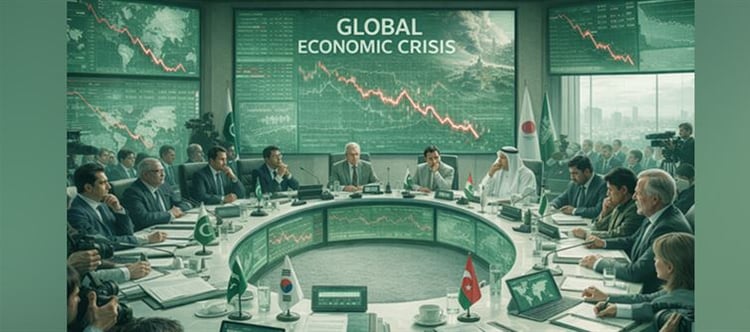

Over the past week, something unusual has unfolded across multiple countries—and it’s hard to dismiss it as a coincidence. On the surface, governments continue to reassure their citizens that everything is under control. But behind those statements, a very different picture seems to be taking shape.
Take Egypt, for instance. Shops closing early, remote work mandates, and internal references to a “war economy mode”—all of it coming just days after securing a major IMF-backed financial boost. That contrast alone raises eyebrows.
Then there’s Turkey, where the central bank reportedly spent tens of billions trying to stabilize its currency. Now, even discussions around selling national gold reserves are surfacing—moves that typically signal deeper financial strain.
In Pakistan, austerity has suddenly taken center stage. Public announcements about salary cuts and reduced fuel allocations point to tightening conditions, even as the specifics remain unclear. Meanwhile, russia has introduced stricter controls on cash and gold movement, officially to curb the shadow economy—but such measures often emerge during periods of financial pressure.
Iraq is pushing toward a cashless system within government institutions. At the same time, south korea has set up a high-level economic response body—something more commonly associated with crisis management than routine governance. And in India, the quiet creation of a multi-billion-dollar stabilization fund, tucked away in budget documents, suggests precautionary steps that haven’t been widely discussed.
Add to this Lebanon’s ongoing currency collapse and mounting financial damage, and a broader pattern begins to emerge.
Each move can be explained individually. But taken together—and happening within such a short span—they hint at something larger.
Because when multiple governments start acting like they’re preparing for stress, even while saying everything is fine… people are bound to start asking questions.
 click and follow Indiaherald WhatsApp channel