



THIS ISN’T JUST SENTIMENT, IT’S SCIENCE
We often say a mother is always with you, even after she’s gone. It sounds emotional, almost poetic. But science suggests something far more literal — and far more powerful. Part of your mother may actually still exist inside your body, quietly, at a cellular level.
1. The Phenomenon You’ve Probably Never Heard Of
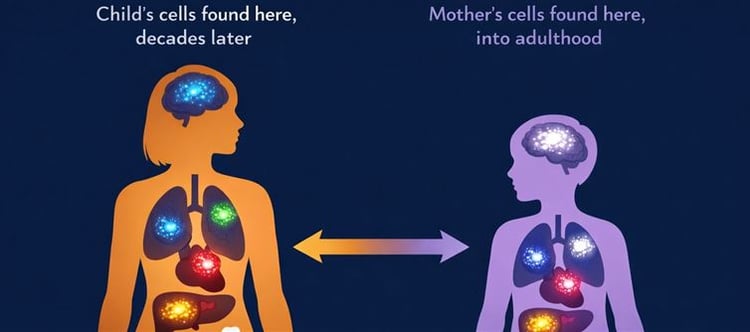
It’s called microchimerism — a biological process where cells from one individual live inside another. During pregnancy, cells don’t just stay where they’re supposed to. They cross between mother and child, embedding themselves in tissues and organs.
2. A Two-Way Exchange, Not One-Sided
Most people assume this transfer only goes from mother to child. But it works both ways. Fetal cells move into the mother’s body, and maternal cells settle inside the child. It’s not temporary — these cells can stay for decades.
3. Living in the Most Unexpected Places
Researchers have found these cells in organs like the heart, liver, lungs — even the brain. In one study, traces of a child’s cells were discovered in the brains of older women years after pregnancy. These aren’t fleeting remnants. They persist.
4. Millions of Cells, Still There
Even if it sounds like a tiny number, it adds up. Estimates suggest that a small fraction of your body’s cells may come from your mother. Given the sheer number of cells in the human body, that means millions of her cells could still be part of you.
5. More Than Presence — Possible Purpose
There’s growing evidence these cells might do more than just exist. Some studies suggest they can respond to injury, contributing to tissue repair or supporting immune function. It’s as if the connection between mother and child is biologically designed to endure — and assist.
BOTTOM LINE
This isn’t just a comforting idea — it’s a scientific reality. The bond between a mother and child doesn’t end at birth, or even with time. In a very real sense, it continues… quietly, invisibly, and remarkably, from within.
 click and follow Indiaherald WhatsApp channel