
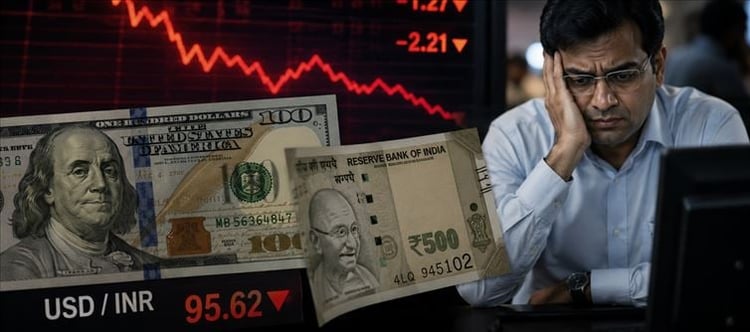


For years, india was projected as one of the world’s biggest growth stories — the next economic giant, the future manufacturing hub, the unstoppable emerging-market powerhouse. But global investors are now sending a far more uncomfortable message: confidence is weakening.
According to reports, foreign investor exits from india have surged sharply over the past year. And the numbers behind the story are difficult to ignore.
The indian rupee has fallen nearly 12% against the dollar. The NIFTY has slipped around 5%. Meanwhile, America’s S&P 500 has surged roughly 26% during the same period. That contrast alone explains why global capital is rapidly shifting direction.
Because investors ultimately chase one thing: returns.
And right now, many foreign funds appear to believe they can get better growth, better currency stability, and better market performance elsewhere — especially in the United States. A falling currency makes indian assets less attractive because foreign investors don’t just lose on stocks; they also lose when converting weakened rupees back into dollars.
That creates a dangerous cycle.
Money exits the market. The currency weakens further. Market sentiment worsens. More investors become nervous. Domestic investors start questioning confidence, too. And suddenly, what looked like a temporary correction starts feeling like a broader warning signal.
Critics argue this reflects deeper structural concerns — slowing consumption, global oil pressure, weak private investment momentum, geopolitical uncertainty, and rising dependence on foreign capital flows. Meanwhile, supporters of the government point out that global instability has affected nearly all emerging economies and that india still remains one of the fastest-growing large economies in the world.
But markets are ruthless. They respond to numbers, not speeches.
And the biggest reason this debate is exploding online is simple: ordinary indians are now feeling the effects directly. A weaker rupee, weaker markets, and rising costs make people question whether the “growth story” is still working for them — or only for headlines.
 click and follow Indiaherald WhatsApp channel