
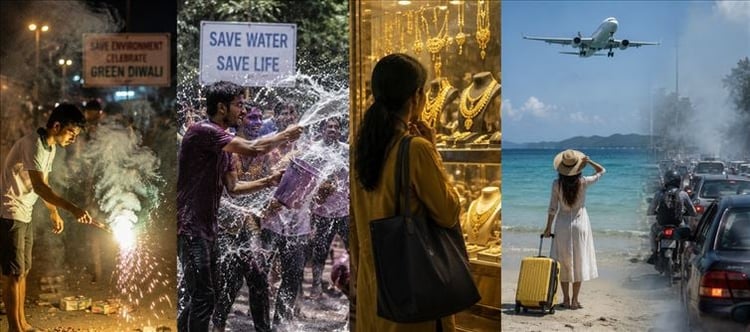


India may be the only country where public awareness campaigns sometimes create the exact opposite reaction. Tell people not to burst crackers during diwali to “save the environment,” and suddenly, entire neighborhoods compete to create a war-zone soundtrack till midnight. Ask citizens to conserve water during Holi, and people proudly upload videos drenching each other with tanker-level water usage like it’s a patriotic achievement.
And now social media is joking — half seriously, half dangerously — about what could happen next.
If people are constantly told to avoid foreign vacations, reduce fuel consumption, or stop buying gold “for the larger national interest,” what if the public reacts the same way again? What if the response becomes emotional rebellion instead of responsible cooperation?
That’s the deeper issue hiding beneath the memes and dark humor. Many indians no longer respond well to top-down moral lectures, especially when those lectures come from political leaders, celebrities, or elites perceived to live completely different lifestyles themselves. people don’t just hear advice anymore — they hear hypocrisy, control, and selective sacrifice.
And once public trust disappears, even sensible messaging starts sounding like manipulation.
This is why online reactions are becoming more sarcastic and aggressive. Citizens already battling inflation, taxes, fuel costs, shrinking savings, and economic anxiety don’t want lifestyle policing from people they believe are untouched by those struggles. The frustration isn’t only about crackers, water, gold, fuel, or vacations. It’s about resentment toward being constantly told what ordinary people should give up while the powerful appear unaffected.
That’s what makes the joke so viral. Because underneath the humor is a brutally honest reality: the more disconnected leadership feels from everyday life, the more rebellion starts looking like resistance.
 click and follow Indiaherald WhatsApp channel