
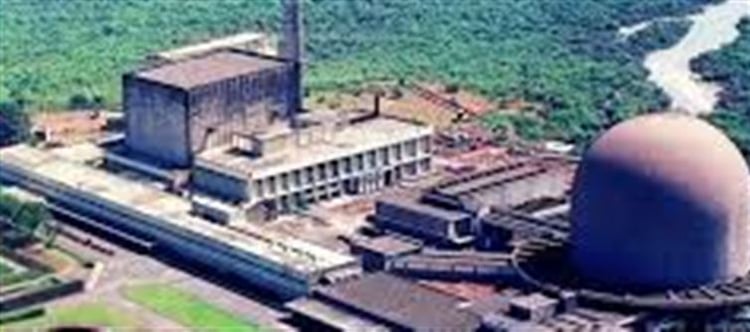


India has pursued thorium‑based nuclear energy research for almost seven decades, driven by a vision to use the country’s abundant thorium reserves for clean and reliable power. However, despite decades of scientific effort, extensive funding and a strong cadre of nuclear scientists, India has not yet achieved a commercial breakthrough in thorium energy — and a recent advance by a US startup has reignited global interest in this long‑pursued fuel pathway.
🧪 Why india Has Focused on Thorium for 70 Years
India lacks large indigenous uranium deposits but has one of the world’s largest thorium reserves, especially in monazite sands along its coasts. This shaped the country’s three‑stage nuclear program, formulated in the 1950s under nuclear pioneer Homi Bhabha, with the ultimate aim of harnessing thorium for electricity generation.
Thorium’s appeal lies in its potential to be a safer, more abundant nuclear fuel that produces less long‑lived radioactive waste than traditional uranium fuels. But converting this promise into a commercially viable reactor has proven technically complex and expensive, requiring decades of fundamental and applied research.
⚛️ New Breakthrough by a US Startup
A US startup (reported in news) has reportedly developed an innovative thorium‑based nuclear fuel concept — offering a novel way to use thorium more effectively in reactors. This development has drawn global attention because it demonstrates practical progress where India’s long programme has yet to deliver a fully commercial solution.
The breakthrough centers on a hybrid fuel design that could work in existing reactor types, potentially offering higher efficiency and longer fuel life, and making thorium energy more economically viable. Such advances could accelerate real‑world deployment of thorium technology if scaled and validated under operating conditions.
👨🔬 Who Is Dr Anil Kakodkar?
Dr Anil N. Kakodkar is one of India’s most respected nuclear scientists. He joined the Bhabha Atomic Research Centre (BARC) in 1964 and rose through the ranks to serve as Director of BARC (1996–2000), Chairman of the Atomic Energy Commission of india (2000–2009), and Secretary to the government of india in the Department of Atomic Energy. He has also been honoured with India’s top civilian awards including the Padma Vibhushan.
Throughout his career, Dr Kakodkar has played a key role in India’s nuclear program, including:
· Leading work on pressurised heavy water reactors (PHWRs) — a mainstay of India’s nuclear fleet.
· Guiding indigenous reactor designs such as Dhruva and work on advanced reactors intended to use thorium‑uranium fuel cycles.
· Advocating self‑reliant nuclear energy with an emphasis on thorium utilization for long‑term energy security.
🧠 Dr Kakodkar’s Role with the US Startup
While the detailed official report doesn’t go into all specifics, the news highlights that Dr Kakodkar has been associated with the US startup’s thorium breakthrough effort, likely in an advisory or consultative capacity. This reflects a collaboration of expertise, where indian nuclear experience — especially on thorium fuel cycle research — is being tapped to inform and accelerate innovation outside traditional institutional frameworks.
In essence, Dr Kakodkar’s decades of experience with thorium‑related reactor research and fuel cycle design — from conceptualizing India’s long‑term thorium strategy to actual technical leadership at BARC — makes him a valuable contributor to global efforts on the subject. His involvement in the startup’s work signifies how foundational indian nuclear science can still influence emerging technologies worldwide.
🔍 Why This Matters for India
India’s investment in thorium research — while not yielding a commercial reactor yet — has built deep scientific capability in reactor physics, materials, fuel cycles and safety systems. Such expertise forms the basis of ongoing global collaborations and gives india a stake in new breakthroughs.
The US breakthrough does not diminish India’s long effort; rather, it underscores the complexity of thorium energy and the value of global scientific cooperation. It also raises the possibility that emerging fuel designs could someday be adapted for India’s own reactors, helping fulfil the original vision laid out by Bhabha and championed by scientists like Kakodkar.
🧾 In Summary
· India has spent nearly 70 years and billions on thorium research aiming for a sustainable, homegrown nuclear fuel solution.
· A US startup’s recent thorium fuel breakthrough is being seen as a major step toward a viable commercial pathway.
· Dr Anil Kakodkar, a leading indian nuclear scientist and former BARC chief, has been involved with the private effort, bringing decades of thorium research experience to the table and bridging public research with private innovation
Disclaimer:
The views and opinions expressed in this article are those of the author and do not necessarily reflect the official policy or position of any agency, organization, employer, or company. All information provided is for general informational purposes only. While every effort has been made to ensure accuracy, we make no representations or warranties of any kind, express or implied, about the completeness, reliability, or suitability of the information contained herein. Readers are advised to verify facts and seek professional advice where necessary. Any reliance placed on such information is strictly at the reader’s own risk.
 click and follow Indiaherald WhatsApp channel