


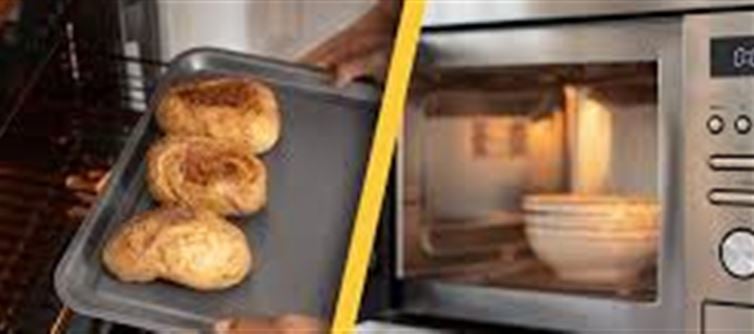

Introduction
When it comes to cooking at home, both microwaves and ovens are essential kitchen appliances, but they serve very different purposes. Choosing the right appliance for your cooking needs can save time, improve food quality, and enhance your overall cooking experience.
How Microwaves Work
Microwaves use electromagnetic waves to heat water molecules inside food. This process cooks food quickly from the inside out, making it ideal for reheating, defrosting, or quickly cooking small meals.
Key Points:
- Heats food rapidly
- Best for softening, thawing, or cooking simple dishes
- Minimal browning or crisping
How Ovens Work
Ovens use conduction, convection, or radiation to cook food by surrounding it with hot air. This slow and even cooking method is ideal for baking, roasting, and browning.
Key Points:
- Cooks food evenly and thoroughly
- Perfect for baking breads, cakes, and roasting meats
- Provides crispy textures and caramelization
Main Differences Between Microwaves and Ovens
Feature
Microwave
Oven
Cooking Speed
Very fast
Slower
Food Texture
Soft, moist
Crispy, browned
Ideal Uses
Reheating, defrosting, quick meals
Baking, roasting, slow cooking
Energy Consumption
Generally lower
Higher for long cooking
Size & Portability
Compact, countertop
Larger, often stationary
Cost
Affordable
Usually more expensive
Pros and Cons
Microwave Pros
- Quick and convenient
- Uses less energy
- Easy to operate
Microwave Cons
- Limited in cooking styles
- Doesn’t brown or crisp food
Oven Pros
- Versatile cooking options
- Produces better texture and flavor
- Suitable for large quantities
Oven Cons
- Longer cooking times
- Higher energy consumption
- Requires more kitchen space
Which One Should You Choose?
- For speed and convenience: Go for a microwave
- For baking, roasting, and flavor-rich meals: An oven is better
- Many modern kitchens benefit from having both, as they complement each other.
Conclusion
While microwaves and ovens may seem similar, they serve distinct cooking purposes. Understanding their differences can help you make informed decisions about your kitchen appliances, cooking techniques, and meal planning.
Disclaimer:
The views and opinions expressed in this article are those of the author and do not necessarily reflect the official policy or position of any agency, organization, employer, or company. All information provided is for general informational purposes only. While every effort has been made to ensure accuracy, we make no representations or warranties of any kind, express or implied, about the completeness, reliability, or suitability of the information contained herein. Readers are advised to verify facts and seek professional advice where necessary. Any reliance placed on such information is strictly at the reader’s own risk.
 click and follow Indiaherald WhatsApp channel