


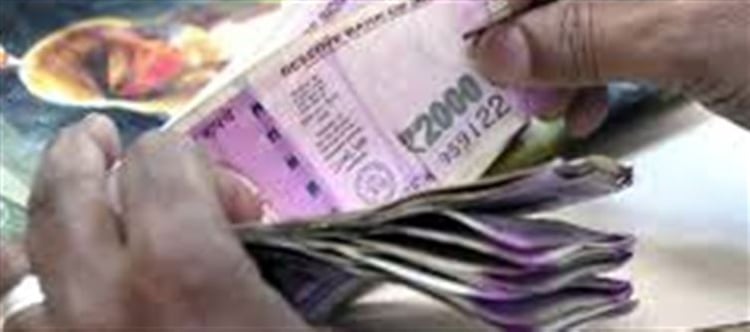

The Reserve bank of india (RBI) has now released the latest status on the high‑value ₹2,000 banknotes, which are no longer in active circulation but remain legal currency. Here’s what you need to know as of early 2026:
🧾 What Has Happened to ₹2,000 Notes?
- The RBI withdrew ₹2,000 notes from circulation on May 19, 2023 as part of currency management efforts — stemming from the fact that this denomination was used less often and printing had stopped earlier.
- Since then, people have been returning these notes to banks or RBI, and a vast majority have already come back into the financial system.
📊 Current Status: Return & Circulation
Here’s the latest RBI update as of 31 January 2026:
✔ Around 98.4 % of all ₹2,000 notes that were in circulation when the withdrawal was announced have now been returned.
✔ The remaining notes still with the public are worth only about ₹5,600 crore (out of the original ₹3.56 lakh crore).
✔ This means very few ₹2,000 notes are still outside the banking system.
🪪 Are ₹2,000 Notes Still Valid?
✅ Yes — ₹2,000 notes continue to be legal tender. You can technically use them to pay someone or deposit them into your bank account.
However, keep in mind:
- After 7 October 2023, regular bank branches stopped accepting ₹2,000 notes for exchange.
- You cannot simply walk into a bank and get new notes in return like before — those normal exchange facilities are closed.
📍 If You Still Have ₹2,000 Notes — What You Can Do
Because regular bank exchange counters are closed, the only practical way now to handle ₹2,000 notes is:
🏦 1. Deposit at RBI Issue Offices
You can visit any of the 19 designated RBI office locations across india to deposit your ₹2,000 notes. These include cities like:
- Mumbai
- New Delhi
- Chennai
- Bengaluru
- Kolkata
- Lucknow
…among others.
At these RBI issue offices, your notes can be accepted and credited into your bank account.
✉️ 2. Send Through india Post
If you can’t visit an RBI office, you can:
- Take your ₹2,000 notes to any India Post office, and
- Send them via registered post to the RBI issue office, along with your bank account and identity details.
The RBI will then credit the equivalent amount directly into your bank account.
This option makes it easier even if you live far from an RBI office.
⚠️ What You Cannot Do Anymore
❌ You cannot exchange ₹2,000 notes at your regular bank branch (this facility ended in October 2023).
❌ You should not accept rumors about new ₹2,000 notes being reissued or printed — no official announcement has been made about issuing new ones. Viral videos claiming this are misleading.
💡 Important Things to Remember
🔹 Still legal tender — these notes are valid for use and recognized by law.
🔹 Deposit/exchange options exist — through RBI offices or india Post, not regular banks.
🔹 Most people have already returned theirs — only a small value of notes remains with holders.
🧠 Why RBI Did This
The ₹2,000 note was introduced in 2016 after the earlier currency change exercise. Over time, it became less useful for daily transactions, and the RBI decided that:
- enough lower denomination notes were in circulation, and
- high‑value notes weren’t needed anymore.
Hence, they initiated the withdrawal to streamline the currency system.
📌 Bottom Line
If you still have ₹2,000 notes:
- Don’t panic — they are still valid.
- You can’t exchange them at regular bank counters anymore.
- But you can deposit them at RBI offices or via india Post to get the value in your bank account.
- And with over 98% already returned, these notes are becoming increasingly uncommon in everyday use.
Disclaimer:
The views and opinions expressed in this article are those of the author and do not necessarily reflect the official policy or position of any agency, organization, employer, or company. All information provided is for general informational purposes only. While every effort has been made to ensure accuracy, we make no representations or warranties of any kind, express or implied, about the completeness, reliability, or suitability of the information contained herein. Readers are advised to verify facts and seek professional advice where necessary. Any reliance placed on such information is strictly at the reader’s own risk.
 click and follow Indiaherald WhatsApp channel