



China has announced a world‑first automotive safety regulation that will ban hidden or flush‑style car door handles on vehicles sold in the country — a move aimed at preventing people from becoming trapped inside vehicles after accidents. This bold step raises a key question for other markets: Should india consider a similar ban to boost passenger safety?
Why china Took the Step
China’s Ministry of industry and Information Technology has mandated that, from January 1, 2027, all new cars sold in the country must have visible, mechanical release door handles on both the exterior and interior of every passenger door (except the tailgate).
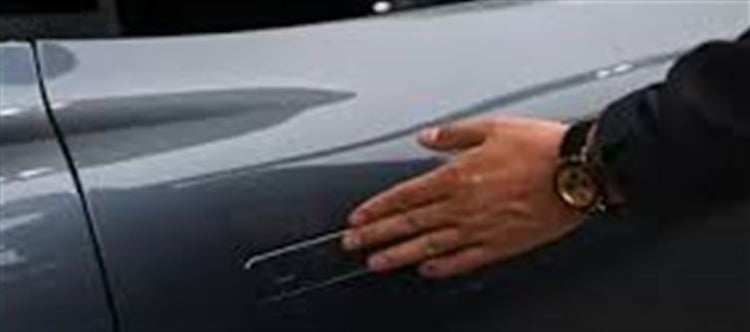
This replaces the hidden or retractable handles — often electronically actuated — that sit flush with the vehicle’s body and emerge only when triggered by a key fob or sensor. Such designs have been popular for their aesthetic appeal and slight aerodynamic gains, especially on many electric vehicles (EVs).
Safety Concerns Behind the Ban
The regulation follows several reported safety problems in which flush door handles:
Malfunctioned during crashes or power failures, preventing doors from opening;
Trapped occupants inside damaged or burning vehicles, complicating rescue efforts;
Made manual access difficult for emergency responders.
In China’s case, some incidents involving EVs — where power outages disabled electronic handles after a crash — were cited as part of the rationale for the ban.
China’s rules also require clear signage and meaningful hand‑operable space near handles to ensure access even in emergencies.
What This Means for Vehicle Design
Hidden or flush handles will be phased out unless they include a mechanical release function that works independently of power systems.
Automakers have until 2029 to update models already approved for sale.
The move affects a large portion of vehicles — about 60 % of top‑selling EVs in china used hidden handles before the ban.
China’s position as the world’s largest automobile and EV market means this policy could influence global design priorities in future safety standards.
Safety vs. Style: The Global Debate
Hidden door handles have been lauded for sleek aesthetics and minor aerodynamic efficiency — which can extend EV range — but critics argue that they introduce a failure point in emergencies and complicate user operation.
Manufacturers have responded with hybrid solutions in some cases — for example, handles that work electronically normally but also have a mechanical override. Such designs could meet safety goals without losing modern styling.
Should india Consider a Similar Ban?
In india, several mainstream and premium models already feature hidden or flush handles, including EVs and even some luxury petrol cars.
Experts and safety advocates in india offer a range of views:
Arguments for a Similar Safety Regulation
Road safety should be a priority — design features should not compromise emergency escape or rescue.
India’s mixed road conditions and emergency infrastructure can amplify risks when people cannot exit vehicles quickly.
Mechanical handles are simpler and more reliable, especially when power systems fail.
Arguments for Caution
India’s automotive market differs substantially from China’s in terms of vehicle mix, usage patterns and regulatory landscape.
Rather than an outright ban, some suggest that india should conduct focused safety testing and risk assessment before legislating.
Automakers could be encouraged to adopt fail‑safe mechanical overrides instead of banning entire design types.
Automotive analyst Puneet Gupta has noted that while safety concerns raised by china are meaningful, india should not “ban blindly” without its own data and testing to balance safety, cost, and design innovation.
What Other Regulators Are Doing
Safety authorities in other major markets have flagged similar concerns. For example, the U.S. National Highway Traffic Safety Administration (NHTSA) has investigated incidents where tesla door handles failed after power loss, prompting scrutiny of electronic handle safety.
However, china remains the first major country to convert those concerns into binding regulation — potentially inspiring others.
Conclusion: Safety First — With Context
China’s hidden door handle ban is a milestone in automotive safety policy, emphasizing ease of access and rescue readiness in emergencies. Whether india should follow suit requires careful consideration:
Safety experts argue regulations could reduce avoidable risks.
Industry voices call for robust local testing and evidence before mandating design changes.
Consumers are caught between evolving automotive trends and practical safety concerns.
A balanced approach in india might start with safety assessments and standardized rescue‑ready design requirements, ensuring that modern style does not compromise human life — a guiding principle any nation should uphold.
Disclaimer:
The views and opinions expressed in this article are those of the author and do not necessarily reflect the official policy or position of any agency, organization, employer, or company. All information provided is for general informational purposes only. While every effort has been made to ensure accuracy, we make no representations or warranties of any kind, express or implied, about the completeness, reliability, or suitability of the information contained herein. Readers are advised to verify facts and seek professional advice where necessary. Any reliance placed on such information is strictly at the reader’s own risk.
 click and follow Indiaherald WhatsApp channel