


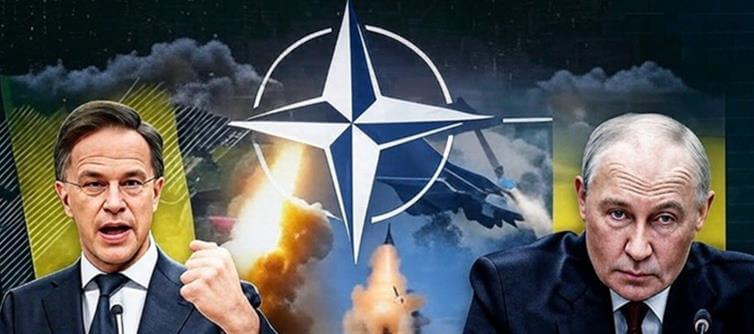

🔥A NEW DANGER HAS BEEN DRAWN IN THE SAND — AND moscow SEES IT
For decades, the unspoken rule was clear: attack NATO, and NATO — eventually — retaliates. Now, that rule is gone. In a startling policy shift, NATO’s top military officer has said the alliance is ready to pre-emptively strike russia in response to its creeping campaign of cyberattacks, sabotage, undersea-cable sabotage, and airspace incursions.
With that single statement, the grey zone between peace and war has shrunk — and the countdown to confrontation may already be ticking. moscow has been handed a choice: back off, escalate, or face consequences. And this time, NATO might just mean it.
💣 WHAT IT MEANS
1. NATO Is No Longer Waiting for a Big Bang to Act — Sabotage, Cyber & Drones Are Enough
According to Giuseppe Cavo Dragone, chair of NATO’s Military Committee, recent sabotage and cyber incidents across europe — from severed cables to drone incursions — have pushed the alliance to rethink defense. “We must consider being proactive instead of reactive,” he said.
That means the old logic — “wait until bombs fall, then respond” — has been discarded.
2. “Pre-Emptive Strike” Now Rises to the Level of “Defensive Action.”
Dragone didn’t just hint; he said a pre-emptive move might legally and morally qualify as defence under certain circumstances — even if it breaks new ground for NATO.
In other words, NATO is redrawing the rules and making clear that shadow-warfare by russia could now trigger a real military blow.
3. Pressure Is Building: Eastern european Allies Push for Toughness, While Legal Lines Blur
Diplomats from NATO’s eastern flank — long on the front lines of Russian hybrid operations — have quietly urged a tougher approach. Meanwhile, legal, ethical, and jurisdictional complications remain. NATO’s shift isn’t easy; it’s risky.
But the urgency is real.
4. NATO’s Deterrence Strategy Moves From Passive Protection to Offensive Prevention
Initiatives like Baltic Sentry — meant to patrol critical infrastructure — were once enough. Now, political and military leaders seem to believe that only action matters. NATO may respond with cyber-counterattacks, sabotage, disruption, or even kinetic strikes — before russia can strike again.
5. moscow Is Already Warning Back: Escalation Risk Just Jumped Dramatically
Russia’s foreign ministry slammed Dragone’s remarks as “irresponsible and escalatory,” accusing NATO of sabotaging peace efforts and raising the risk of broader conflict.
This may be exactly the kind of escalation NATO hopes to deter — or provoke.
6. europe Quietly Shifts into Wartime Posture: air Defenses, Military Planning, and Strategic Overhauls
Behind public statements, NATO and member states are mobilizing — increasing air defenses, revising rules of engagement, beefing up infrastructure — preparing for a world where drone strikes and cable-cuts are as lethal, or nearly as lethal, as artillery.
⚠️ WHY THIS MOMENT COULD BE HISTORY-MAKING
Because this is the first time since the Cold War that NATO has publicly acknowledged pre-emptive action as a legitimate response. This isn’t a drill — it’s a new doctrine.
Because Russia’s hybrid attacks — sabotage, cyber, drones — are cheap and deniable. Now, deniability might no longer protect them.
Because the moment of hesitation — or miscalculation — is shrinking. A single decision could tip the scales from cyber-war to kinetic war.
Because NATO, once seen as reactive, is now daring to shape events — not just respond to them.
 click and follow Indiaherald WhatsApp channel