


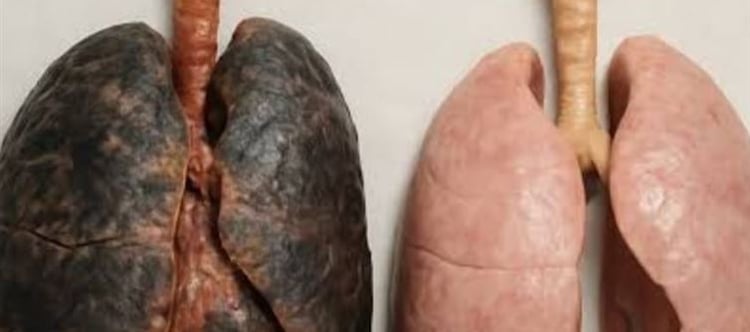

Lung cancer is no longer limited to smokers.
Around 10–20% of lung cancer cases occur in never-smokers, with even higher rates reported in parts of Asia.
This shift highlights new, under-recognised risk factors beyond tobacco use.
Why Is Non-Smoker lung cancer Increasing?
Environmental Exposure
Outdoor air pollution, especially fine particulate matter and diesel exhaust, is a major contributor.
Indoor risks include radon gas, asbestos, arsenic, and poorly ventilated cooking fumes, particularly from biomass fuels.
Second-Hand Smoke
Passive smoking remains dangerous.
Studies estimate 15–35% of lung cancers in never-smokers may be linked to long-term exposure to others’ tobacco smoke.
Genetics and Tumour Biology
Lung cancer in never-smokers often differs biologically.
These cases are commonly adenocarcinoma and frequently show EGFR mutations or ALK rearrangements, which affect treatment choices.
Changing Demographics
Women and people of east Asian descent are disproportionately affected.
Research shows 15.7% of women with lung cancer had never smoked, compared to 9.6% of men.
What Are We Missing
Low Awareness
Many non-smokers still view lung cancer as a smoker’s disease, delaying medical attention.
Screening Gaps
Current screening guidelines focus on smoking history, excluding high-risk non-smokers.
Unmeasured Risks
Indoor air quality, cooking smoke, radon exposure, and occupational hazards are often poorly assessed.
Prevention Blind Spots
Tobacco control dominates prevention efforts, while environmental and indoor risks receive less focus.
What Needs to Change
Clinical Vigilance
Persistent cough, chest pain, or unexplained symptoms in non-smokers should not be ignored.
Broader Risk Assessment
Clinicians should ask about air pollution, cooking fuels, second-hand smoke, occupation, and family history.
Policy and Environmental Action
Improve ventilation, reduce biomass fuel use, radon test, and control ambient air pollution.
Early Molecular Testing
Genomic profiling is crucial to guide targeted therapy in never-smokers.
Education
Shift public and professional perception from “smoker-only” lung cancer to inclusive risk recognition.
Disclaimer:
The information contained in this article is for general informational purposes only. While we strive to ensure accuracy, we make no warranties or representations of any kind, express or implied, about the completeness, accuracy, reliability, suitability, or availability of the content. Any reliance you place on the information is strictly at your own risk. The views, opinions, or claims expressed in this article are those of the author and do not necessarily reflect the official policy or position of any organization mentioned. We disclaim any liability for any loss or damage arising directly or indirectly from the use of this article.
 click and follow Indiaherald WhatsApp channel