


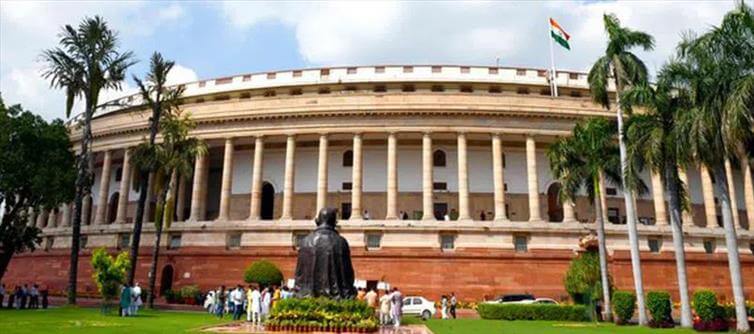

The central government has called a special session of parliament from 18 to 22 September. Giving information about
this, Parliamentary Affairs minister Prahlad Joshi wrote on the social media platform, "The special session of Parliament
(13th session of 17th lok sabha and 261st session of Rajya Sabha) has been called from 18 to 22 September."
Till now no official information has been given about what is going to be the agenda of this special session. However, the
central government has formed a committee under the chairmanship of former President Ramnath Kovind to explore the
possibilities of 'One Nation One Election'. In such a situation where it is being speculated that in this special session 'One
country one election' bill can be introduced. So, on the other hand, the opposition has raised questions that what kind of
emergency has come that the Center is unable to wait for the winter session as well.
Amidst the questions of the opposition, in this story, let us tell you what is this special session, why is it called and how
does it work? Procedure for calling a special session of Parliament
According to Article 85 of the Constitution, the central government has the power to call the parliament session. The
decision to convene the session is taken by the cabinet Committee on Parliamentary Affairs, after which the President has
to formally approve the session. Although there is no fixed parliamentary calendar in India, three sessions of traditional
parliament are held.
Budget Session (February-March)
Monsoon Session (July-August)
Winter Session (November-December)
These three sessions are called after at least 6 months. But apart from these three normal sessions, if the Center needs, it
can also call a special session of the Parliament. Under Article 85(1) of the Constitution, the President has the right to call a
session of each house of parliament in such circumstances.
 click and follow Indiaherald WhatsApp channel