


🌈 1. Different Colors of Gold
Gold comes in several colors because jewelers mix pure gold with other metals (called alloys). Pure gold itself is yellow, soft, and not practical for daily jewelry.
Gold Color
How It’s Made
Common Uses
Yellow Gold
Mixed with silver, copper, and sometimes zinc
Traditional jewelry, rings, chains
White Gold
Mixed with metals like palladium, nickel, or silver, and often plated with rhodium
Modern rings, engagement rings, watches
Rose/Pink Gold
Mixed with copper
Trendy jewelry, antique-style rings
Green Gold
Mixed with silver and sometimes cadmium
Rare, antique-style jewelry
Black Gold
Made via oxidation or plating with black rhodium or ruthenium
Statement rings, fashion jewelry
💡 Tip: The color of gold does not affect its purity — it just changes its look.
🔹 2. What is gold Carat (Karat)?
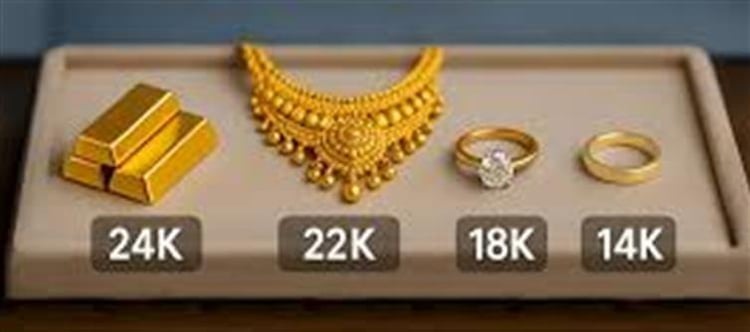
Gold purity is measured in carats (K). This tells you how much pure gold is in the alloy.
Carat
Purity (%)
Notes
24K
99.9%
Pure gold — very soft, not ideal for jewelry
22K
91.6%
Very common in india for traditional jewelry
18K
75%
Popular worldwide for rings and watches
14K
58.5%
Durable, common in the US for jewelry
10K
41.7%
Very hard, budget-friendly, less gold content
✅ Formula:
Purity %=Carat24×100\text{Purity \%} = \frac{\text{Carat}}{24} \times 100Purity %=24Carat×100
For example, 18K gold = 1824×100=75%\frac{18}{24} \times 100 = 75\%2418×100=75% pure gold.
💡 Quick Tips When Buying gold Jewelry
Check the hallmark – It shows purity (22K, 18K, etc.).
Remember color vs. purity – A white, black, or green gold piece can still be 22K or 18K.
Alloy affects durability – More alloy = stronger but less pure.
Price depends on purity – 24K is most expensive; 14K is cheaper.
Disclaimer:
The views and opinions expressed in this article are those of the author and do not necessarily reflect the official policy or position of any agency, organization, employer, or company. All information provided is for general informational purposes only. While every effort has been made to ensure accuracy, we make no representations or warranties of any kind, express or implied, about the completeness, reliability, or suitability of the information contained herein. Readers are advised to verify facts and seek professional advice where necessary. Any reliance placed on such information is strictly at the reader’s own risk.
 click and follow Indiaherald WhatsApp channel