


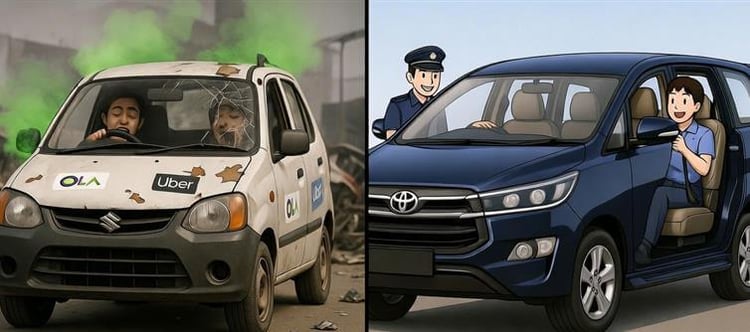

🔥The Cab Market Where Everyone Wins Except the Customer
india has 1.4 billion people, millions of daily commuters, and one of the world’s biggest mobility markets. Yet we still don’t have a reliable cab service. ola lost focus. BluSmart burned through cash. uber coast on market dominance without caring about quality. Rapido fills gaps with bikes. And the customer? They get smelly seats, dented doors, rattling engines, and premium pricing for cars that scream “budget hatchback misery.” Meanwhile, Southeast Asia gets Grab — clean, spacious, dependable. india gets excuses.
1️⃣ india Doesn’t Have a Cab Problem — It Has a Quality Problem
You open the app, you pay the premium, you expect a clean, safe car.
Instead?
A 7-year-old Dzire with bad suspension, torn seats, and an air freshener is fighting a losing battle.
India’s cab game isn’t broken because of demand.
It’s broken because quality doesn’t matter to the companies running it.
2️⃣ ola Had the Market in Its Hands… And Lost the Plot
ola had the first mover advantage.
A historic opportunity.
A monopoly-size head start.
But instead of building reliability, service quality, or strong driver training, it chased diversions like:
Electric dreams without infrastructure
Scooter deliveries
Food apps
And random side projects
Result?
A brand spreads thin, losing trust fast.
3️⃣ BluSmart Began as the Savior… Then Started Sinking
Electric cabs. Clean rides. Professional drivers.
BluSmart had hope written all over it.
But high burn, capital-heavy fleet ownership, and limited infrastructure pushed the company toward the cliff.
They fixed quality…
But they couldn’t fix the economics.
4️⃣ uber and Rapido Work — But Barely
A ride will arrive.
But beyond that?
All bets are off.
Cars vary wildly.
Standards don’t exist.
Bad smells, broken AC, worn-out seat covers, and erratic driver behaviour are par for the course.
Uber runs on autopilot.
Rapido survives because two-wheelers are cheap.
But neither offers consistent quality.
5️⃣ Compare india to Southeast Asia — The Gap Is Embarrassing
In Thailand.
In Vietnam.
In Malaysia.
On Grab, you get:
Clean cars
Spacious vehicles
Well-maintained interiors
Polite drivers
Transparent pricing
Often for the same price or cheaper than an indian cab.
India isn’t behind on tech.
It’s behind on standards.
6️⃣ RTO Rules Make Fleet Creation a Nightmare
In many countries, anyone with a private car can occasionally drive as a cab.
In India?
No commercial registration = No cab.
Commercial registration =
Higher taxes
Higher fees
More inspections
More red tape
The result?
A system that discourages quality fleet expansion and pushes everything into the cheapest possible vehicles.
7️⃣ maruti Dominates — And Quality Suffers
Most fleet owners pick:
Alto
WagonR
Swift Dzire
Why?Best mileage
Lowest maintenance
Cheapest parts
Maximum profit
Great for the driver.
Terrible for the passenger.
No company pushes for better cars.
No government enforces minimum standards.
No one prioritizes passenger comfort.
8️⃣ The Market Is Begging For a Premium, Reliable Cab Service
india is a massive untapped goldmine for:
✔ Mid-range premium cabs
✔ Clean, safe fleets
✔ Standardized quality
✔ Proper customer experience
✔ Better driver onboarding
But everyone so far has chosen scale over quality.
And the result is a market collapsing under its own inconsistency.
🔥 FINAL MIC-DROP
india doesn’t lack demand.
India lacks accountability.
A billion-dollar mobility market, and still not a single truly reliable cab service.
Southeast Asia evolved.
India compromised.
Until someone builds a service where quality matters as much as scale, every indian ride will be a gamble — premium on the app, punishment in the car.
 click and follow Indiaherald WhatsApp channel