
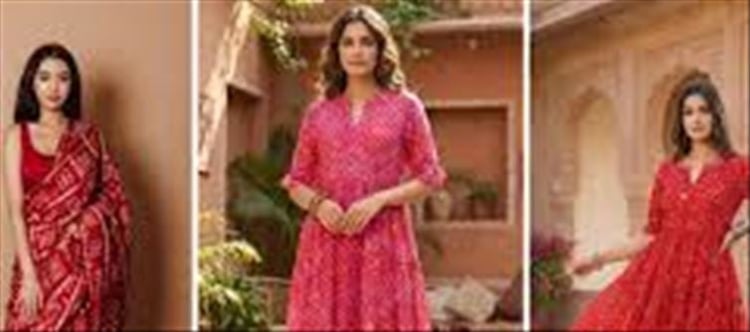


Bandhani is one of India’s most ancient and iconic textile arts—a tie-dye technique that has survived for thousands of years and is now making waves in global fashion runways.
🪡 1. What is Bandhani?
Bandhani
Bandhani (also called Bandhej) is a tie-dye textile technique where:
Small sections of fabric are tightly tied with thread
The cloth is then dyed in vibrant colors
After untying, beautiful dotted or patterned designs emerge
👉 The result: intricate patterns made entirely by hand.
🏺 2. Ancient roots of Bandhani
Bandhani is believed to be one of the oldest known textile traditions in India, with origins tracing back over 5,000 years.
Historically:
Practiced in Rajasthan and Gujarat
Used in royal garments and ceremonial clothing
Mentioned in ancient indian trade and cultural records
👉 It was not just fabric—it was a symbol of status, tradition, and craftsmanship.
🎨 3. How Bandhani is made (simple process)
The technique is highly skill-based and time-consuming:
🧵 Fabric is marked with patterns
✋ Tiny knots are tied using thread
🎨 Fabric is dyed in stages
🔓 Knots are removed to reveal patterns
👉 Each piece can take weeks or even months to complete.
🌈 4. Why Bandhani stands out
🟡 Vibrant colors (red, yellow, green, blue)
⚪ Signature dotted patterns
🧶 Entirely hand-crafted (no machines)
🎭 Each piece is unique
👉 No two Bandhani fabrics are exactly the same.
🌍 5. Bandhani in global fashion today
Bandhani has moved from traditional indian wear to global luxury fashion:
👗 On international runways
Used by designers in haute couture collections
Integrated into dresses, scarves, and jackets
🌟 Celebrity fashion
Seen in fusion outfits and red carpet looks
Combined with modern silhouettes
🧵 Luxury collaborations
Designers mix Bandhani with silk, organza, and satin
Used in sustainable and artisan-focused fashion lines
🧠 6. Why global designers love Bandhani
♻️ Sustainable (handcrafted, low machinery use)
🎨 Rich visual texture
🌏 Cultural storytelling
🧵 High craftsmanship value
👉 It represents the global shift toward heritage + slow fashion.
🇮🇳 7. Cultural significance in India
Bandhani is deeply connected to:
Weddings and festivals
Regional identity (especially gujarat & Rajasthan)
Traditional attire like sarees, dupattas, turbans
👉 It is still widely worn during celebrations like navratri and weddings.
🧾 Bottom line
Bandhani is more than a fabric—it is:
👉 A 5,000-year-old craft
👉 A symbol of indian heritage
👉 A globally admired fashion art form
From rural artisans to international fashion houses, Bandhani continues to prove that ancient craftsmanship never goes out of style.
Disclaimer:
The views and opinions expressed in this article are those of the author and do not necessarily reflect the official policy or position of any agency, organization, employer, or company. All information provided is for general informational purposes only. While every effort has been made to ensure accuracy, we make no representations or warranties of any kind, express or implied, about the completeness, reliability, or suitability of the information contained herein. Readers are advised to verify facts and seek professional advice where necessary. Any reliance placed on such information is strictly at the reader’s own risk.
 click and follow Indiaherald WhatsApp channel