


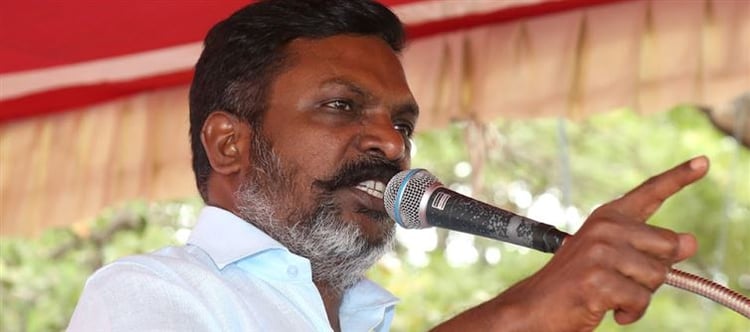

At a time when stability usually defines political strategy, this move feels anything but routine. With nearly three years still left in his tenure as a Member of Parliament, Thiruma’s decision to contest from the Kattumannarkoil assembly constituency has sparked intense curiosity—and no shortage of speculation.
Because let’s be clear: this isn’t a small step. If he contests and wins, it would almost certainly mean resigning from his mp position. And that raises the obvious question—why trade a national-level role for a state assembly seat unless there’s something bigger at play?
History offers a reference point. Back in 1967, when the DMK first came to power, C.N. Annadurai was an MP. After the party’s victory, he stepped down, became chief minister with the support of MLAs, and secured his position through a by-election within six months. But that was a move backed by a clear path to the top post.
Here, the equation feels different.
There’s no visible indication—at least publicly—that Thiruma is in line for a chief minister or even a major ministerial role. So the decision naturally fuels speculation. Is this a calculated move to strengthen his influence within tamil Nadu politics? A strategic positioning move in case of shifting power dynamics?
Or is there a deeper layer—one that involves internal equations within the ruling alliance?
Some observers wonder whether this could be a pre-emptive move to support chief minister M.K. stalin during a potential political crunch. Others read it differently—as a subtle pressure tactic, or even the beginning of a more assertive political stance.
Whatever the intent, one thing is undeniable: this isn’t a routine candidacy. It’s a move that could reshape equations—and it’s already got everyone watching closely.
 click and follow Indiaherald WhatsApp channel