



Aditya-L1: Know which camera took the picture of the sun, how did it work even in the scorching fire?
AdityaL1 spacecraft was launched by isro on september 2, the purpose of which is to study the solar atmosphere. Recently ISRO's Aditya-L1 has taken some photos of the Sun.
Aditya L1 SUIT
Aditya L-1 spacecraft has captured some full wavelength pictures of the sun between 200 to 400 nanometers through SUIT. These pictures have been shared by isro on Twitter, /and are visible in 11 different colors. This is the first time that SUIT has taken full-disk pictures of the Sun. Today we are going to tell you how the Aditya L-1 spacecraft captured this photo and which camera was installed in it that captured the photo of the sun. Aditya L-1 spacecraft was launched by isro on 2 september and its SUIT payload was opened by isro on 20 November.
What is this suit?
ISRO has installed a Solar Ultraviolet Imaging Telescope (SUIT) in this spacecraft which has taken pictures of the sun's photosphere and chromosphere. Photosphere means the surface of the sun, while chromosphere means the thin layer present between the surface and the outer atmosphere. The chromosphere extends up to 2000 kilometers above the surface of the Sun.
Let us tell you, earlier on december 6, a light science image of the sun was taken. This is the first time that full disk images have been captured with the help of SUIT. Full disk means the complete picture of the part of the sun that is in front. In the post shared by isro, you can see that plagues, spots, and quiet parts of the sun are visible.
Who created SUIT?
SUIT was developed by scientists from the Manipal Academy of Higher education (MAHE), Inter-University Center for Astronomy and Astrophysics (IUCAA), Center for Excellence in Space Science indian (CESSI), indian Institute of Astrophysics, udaipur Solar Observatory, Tezpur University, and ISRO. Made together. This is one of the 7 different payloads fitted in Aditya L1.
How was the photo taken?
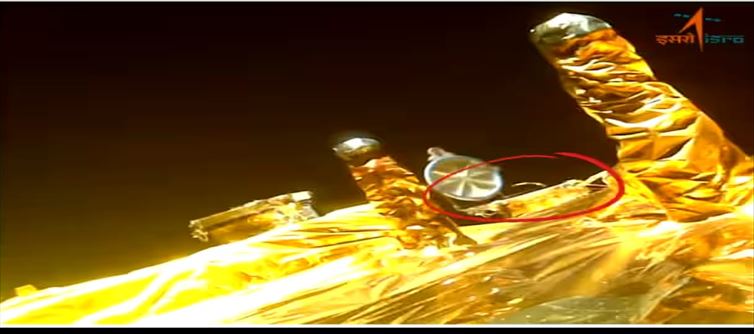
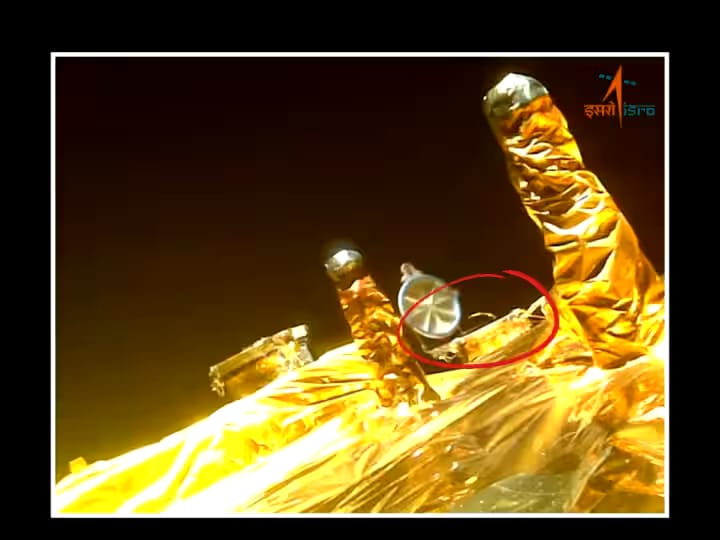
Video captured by an onboard camera on december 5 shows the opening and closing of the SUIT probe's aperture, allowing solar radiation to enter the payload and thermal filter. Former isro scientist manish Purohit said that if all the radiation coming from the sun is allowed to enter the optical cavity, the mirror and detector could be damaged due to overheating.
To prevent this from happening, a metal dye electric has been installed which reflects most of the solar flux below 200 nanometers and above 400 nanometers. He said that in this range only 1 percent of the flux is transmitted to the main optical chamber of the SUIT, due to which it does not get damaged. With its help, full-disk pictures of the sun have been taken.
 click and follow Indiaherald WhatsApp channel