


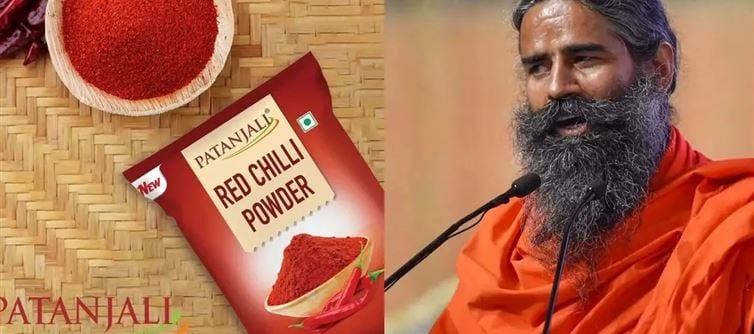

🔥 “‘Unsafe’: The Word That Just Burned Patanjali in Parliament.”
Parliament Drops the Bomb
It wasn’t a media sting. It wasn’t an activist expose. It was the government of india itself, speaking inside the Lok Sabha. A sample of Patanjali Foods’ red chilli powder, manufactured at its Uttarakhand unit, was officially declared UNSAFE after exceeding Maximum Residue Limits (MRLs) for pesticide residues. The admission came straight from MoS for health Prataprao Jadhav, leaving no room for spin, silence, or denial.
🧪 What Went Wrong? The Science Didn’t Lie
During a nationwide 2024–25 spice sampling drive, authorities tested chilli powder samples under FSSAI surveillance. One Patanjali sample failed. The reason? Pesticide residues beyond legally permitted limits—a clear violation of food safety norms. In plain terms, this product should never have reached consumer kitchens.
🚨 Recall Ordered. Damage Done.
Once the test results came in, the concerned authority issued a recall order, forcing Patanjali’s Food business Operator (FBO) to withdraw the affected batch from the market. The process followed the rulebook—but the question lingers:
👉 How many households consumed it before the recall kicked in?
🆚 Amul Cleared. Patanjali Cornered.
In the same breath, the government clarified something crucial—and damning by contrast.
🔹 No Amul products were found unsafe under FSSAI parameters.
The message was subtle but sharp: compliance is possible; shortcuts are not inevitable.
🏛️ Mahua Moitra’s Question, Government’s Uneasy Answer
The revelation came in response to a pointed question by TMC mp Mahua Moitra, who asked what the government is doing to ensure only quality-tested, safe food reaches consumers. The answer leaned heavily on process—FSSAI mandates, surveillance drives, NASP inspections, and enforcement actions.
But processes don’t erase failures. They only explain them after the damage is exposed.
⚖️ The Law Is Clear. The Violation Is Clearer.
Under the Food Safety and Standards Act, 2006, enforcement is a shared responsibility between the Centre and States. When violations are found, FBOs face punitive action. Yet, time and again, major brands slip through—until parliament itself calls them out.
🔥 The Bigger Question No One Can Dodge
This isn’t just about chilli powder.
This is about trust, branding, and accountability.
When a brand sells purity, nationalism, and health as its core identity, even one “unsafe” tag hits harder than a thousand ads can heal.
The chilli burned.
The lab confirmed it.
And parliament put it on record.
 click and follow Indiaherald WhatsApp channel