


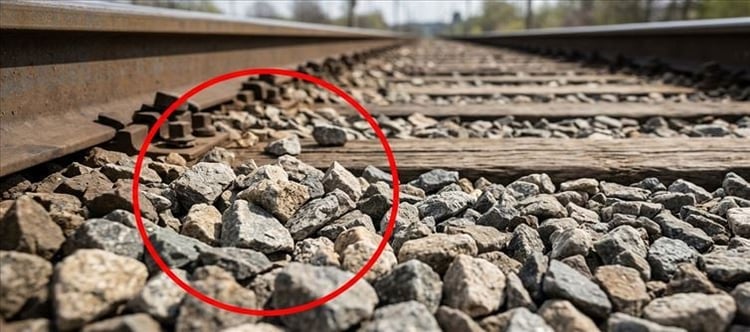

Railway tracks may look simple from the outside — just steel rails stretching endlessly into the distance. But beneath every train roaring at high speed lies a hidden engineering trick most people never think about: the crushed stones packed around the tracks. Those rough rocks aren’t dumped there randomly. They are one of the most important safety systems in the entire railway network.
These stones are called ballast, and without them, railway tracks would become dangerously unstable in no time.
Every time a massive train passes, enormous pressure and vibrations slam into the rails and sleepers. Ballast acts like a shock absorber, locking everything firmly in place and spreading the train’s weight evenly into the ground below. Without that support, the tracks would slowly shift, bend, sink, and crack under repeated stress.
But stability is only half the story.
Ballast also plays a major role in drainage. Rainwater can quickly seep through the gaps between the stones instead of collecting underneath the tracks. If water were allowed to stagnate, the soil below would soften, erode, and weaken the entire foundation. In extreme cases, tracks could collapse or become misaligned.
The stones even help stop nature from taking over. Thick vegetation and weeds struggle to grow through the sharp crushed rock, reducing maintenance problems and protecting the tracks from root damage.
In short, those ugly-looking stones are doing the hard, invisible work that keeps trains fast, stable, and safe. Remove them, and railway tracks wouldn’t just look different — they would become a disaster waiting to happen.
 click and follow Indiaherald WhatsApp channel