


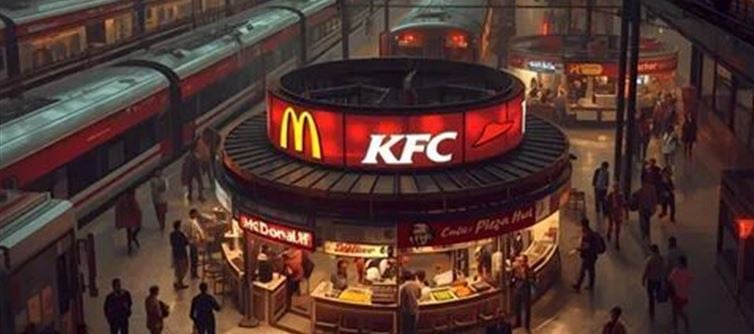

⚡BURGERS ON THE PLATFORM, BROKEN SYSTEMS ON THE TRACKS
In a move that stunned passengers and sparked nationwide debate, indian Railways has opened up over 7,000 stations to fast-food giants — McDonald’s, KFC, pizza Hut, Haldiram’s and more — offering 5-year contracts through e-auctions as part of a massive redevelopment push across 1,200 stations.
But the celebration is far from unanimous.
For many critics, the announcement feels like a gut punch in a year marred by derailments, collisions, loss of life, and repeated alarms about an overstretched safety network.
As one furious commentator put it:
“We get fast food. We don’t get safe trains.”
The decision has ignited a fierce national conversation about priorities, governance, commercialization, and the long-standing gap between passenger experience and passenger safety.
🔥 WHY THE FAST-FOOD EXPANSION HAS india SEEING RED
1. 7,000 Stations for Fast Food — But Who’s Redeveloping Railway Safety?
Critics argue that the Railways is opening its doors to multinational food chains faster than it is repairing outdated tracks, signalling systems, or accident-prone routes.
The contrast is impossible to ignore.
2. Public Outrage Peaks: ‘Profits Before Passengers.’
The expansion is seen by many as a revenue play — high-yield corporate contracts over urgent structural fixes.
Online backlash calls it “profit-first policymaking.”
3. Survivors of train Tragedies Call the Timing Insensitive
In the aftermath of deadly crashes this year, families are still grieving.
Announcements about commercial partnerships feel like the system is moving on too quickly — and in the wrong direction.
4. Fast Food, Slow Reform: A Symbol of Skewed Priorities
A shiny KFC outlet may brighten a station — but it doesn’t fix broken signals, neglected maintenance, or staff shortages.
The optics are being called painfully mismatched.
5. The health Angle: Junk Food for Millions of Poor Passengers
Critics also highlight a second concern:
Introducing calorie-heavy, ultra-processed food at thousands of stations normalises junk diets among low-income travellers who already face limited healthy options.
Convenience shouldn’t come at a nutritional cost.
6. The E-Auction Push Feels Like a corporate Feast
Redevelopment is welcome — but the scale and speed of commercial onboarding has raised eyebrows among public-interest advocates who see it as a branding takeover, not a commuter-first upgrade.
7. A System That Reacts to Crises With PR — Not Prevention
After every accident, the Railways promise reforms.
Yet critics argue the big announcements tend to be cosmetic, while safety audits, staffing demands, and technical upgrades struggle in silence.
8. A Harsh Viral Line Captures the Mood
One biting comment viral across social platforms summed it up:
“In india, authorities notice the illegal only after tragedy — and notice revenue long before safety.”
Not an accusation, but a sentiment millions resonated with.
9. Debate Intensifies: Should Railways Be a business or a Public Lifeline?
This decision revived the core argument:
Is the Railways meant to maximise revenue or maximise safety?
Is it a platform for passengers — or for brands?
The questions aren’t new, but the fast-food rollout has reignited them with full force.
10. Demanding Accountability Is Not Anti-Progress — It’s Pro-Survival
No one is rejecting development.
No one is rejecting modernisation.
People are asking for a simple sequencing:
Fix tracks before fixing menus.
Upgrade signalling before upgrading shopping options.
Protect lives before protecting revenue.
🔥 SHINY STORES WON’T HIDE CRACKED TRACKS
india deserves beautiful stations.
India deserves global-level amenities.
India deserves thriving commerce.
But above all,
India deserves safe trains.
Until safety gets the same urgency as commercial expansion,
every new outlet — every new contract —
will remind passengers of the uncomfortable truth critics are shouting:
“It’s not that india cannot modernise.
It’s that india modernises the wrong things first.”
 click and follow Indiaherald WhatsApp channel