



Your sleep problems may not be a lifestyle issue..!?
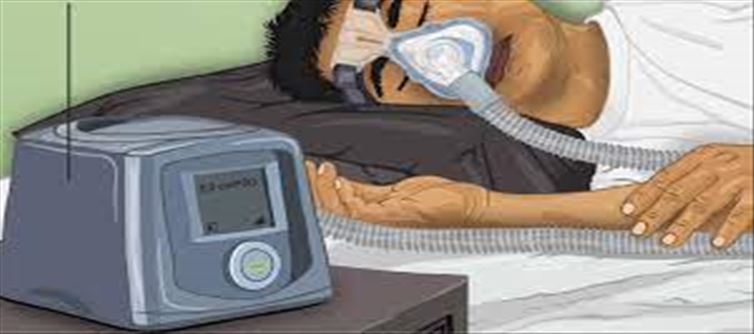
Millions of indians with undiagnosed sleep apnea get the wrong advice from friends, family, Google, and news media. Do you sometimes wake up in the middle of the night? And then do you feel extremely thirsty? Do you often have the urge to pee, even when you don't really need to? Do you have morning headaches, fatigue, or daytime sleepiness? Do you tend to forget small things like where you kept your phone or keys? Are you often irritable?
Yes! Yes! Yes! But how did he know?
He conducted a sleep test, which had me sleeping with some wires and a machine around me, in the comfort of my home, on my own bed. A pulse oximeter, tightly wrapped around my index finger with tape, continuously measured my blood oxygen as I slept. A wire rested on my nostrils, recording my breathing pattern. The machine also recorded my heart rate. It was initially uncomfortable sleeping with all these paraphernalia around me, but I fell asleep anyway.
The next day, I went to the doctor to return the equipment. The data was downloaded on a computer, and in an instant, a printout diagnosed me with severe obstructive sleep apnea (OSA). I should have seen a doctor long ago, but I was captive to what I call the 'Lifestyle Advice Industry'. Friends, family, Google, and news media — all tell you to correct your “lifestyle” to address issues like obesity and poor sleep. The blame is always on you.
I remember starting to sleep poorly and putting on weight since the day I turned 18. With every passing year, both problems worsened. The lifestyle Advice industry misguided me into believing that the problem was with the choices I was making.
"Why don't you join a gym?"
I had difficulty explaining I had no energy to work out, having often paid for gyms. It sounded like an excuse, a confirmation that I was lazy.
"Why don't you sleep on time?"
Note to self: Tonight I'll sleep early. Except nobody can summon sleep.
When it does come, I find myself waking up too early or too late, still not feeling refreshed.
Fatigue as a way of life
Over the years, the morning headaches, perpetual fatigue, and low energy became a part of my life. At some point, I stopped seeing it as a problem because I thought it was my obesity, my “lifestyle”, my genes, my mental health, or just me to be blamed. It was what it was.
My condition became so bad that it affected my work, health, relationships, and everything. For many hours after waking up, I would be struggling for energy. This meant that my day would meaningfully begin only by evening. I'm not a morning person, I proudly declared to myself.
This is when your sleep cycle goes for a toss. The later you sleep, the later you wake up. Night becomes day, day becomes night.
I was abhimanyu in a Chakravyuh because one bad night led to a bad day, which led to another bad night. There were nights when I couldn't sleep at all. And by 5 am, I would be so ravenously hungry that I would empty the fridge and then go to a hotel for the early morning buffet breakfast. There were times when I would travel out of town just to keep myself awake all day, and sleep only at night, thus correcting my sleep cycle. I could not even predict when I would be awake and when I might fall asleep. I have missed professional meetings, cool parties, and doctor's appointments because sleep got the better of me.
Sleeping aids that don't work:
Don't worry, said the lifestyle Industry. We can fix this. Why don't you drink a little less coffee? Why don't you try chamomile tea? Melatonin? An all-knowing friend even gave me Alprax. I did not know it at the time, but these sleeping aids were all making my condition worse. They worked at cross purposes with my brain. They told my brain to switch off and go to sleep when it needed to prevent me from going to deep sleep.
Sleep apnea is the inability to breathe during sleep because your airway collapses. If that happens, you'll die — like drowning in water. This is where your brain saves you by waking you up, so that you may make some effort to open your closed airway and breathe again. It happens in an instant without one realizing it.
Sometimes, it can get so bad that the brain presses the emergency alarm and completely wakes you up. You are panting, gasping for breath, choking...just like when you can't swim. You immediately want to drink water. Lots of it. This is why sleeping pills and aids won't work on someone with apnea.
Almost everybody snores, so people don't see snoring as a problem. But the sleep specialist explained to me that snoring was a sign of the airway getting narrowed in sleep.
 click and follow Indiaherald WhatsApp channel